


Winter vs All-Season PCR Tires
The Practical Choice Depends on Winter Severity, Not the Calendar
Winter and all-season PCR tires serve different operating priorities. If a passenger car regularly faces sustained low temperatures, packed snow, slush, or icy side roads, a dedicated winter tire is usually the safer choice. If winters are mild, snow is occasional, and the vehicle remains mainly on cleared urban or highway routes, a quality all-season tire may provide the more sensible year-round balance.
The distinction matters because a tire can look adequately treaded yet lose much of its cold-weather effectiveness when the rubber compound becomes less flexible. In winter conditions, braking distance and directional control often matter more than whether a tire can simply move the vehicle forward. Buyers should therefore assess where and when the car operates, rather than choosing by the name “all-season” alone.
Why Winter Tires Perform Differently
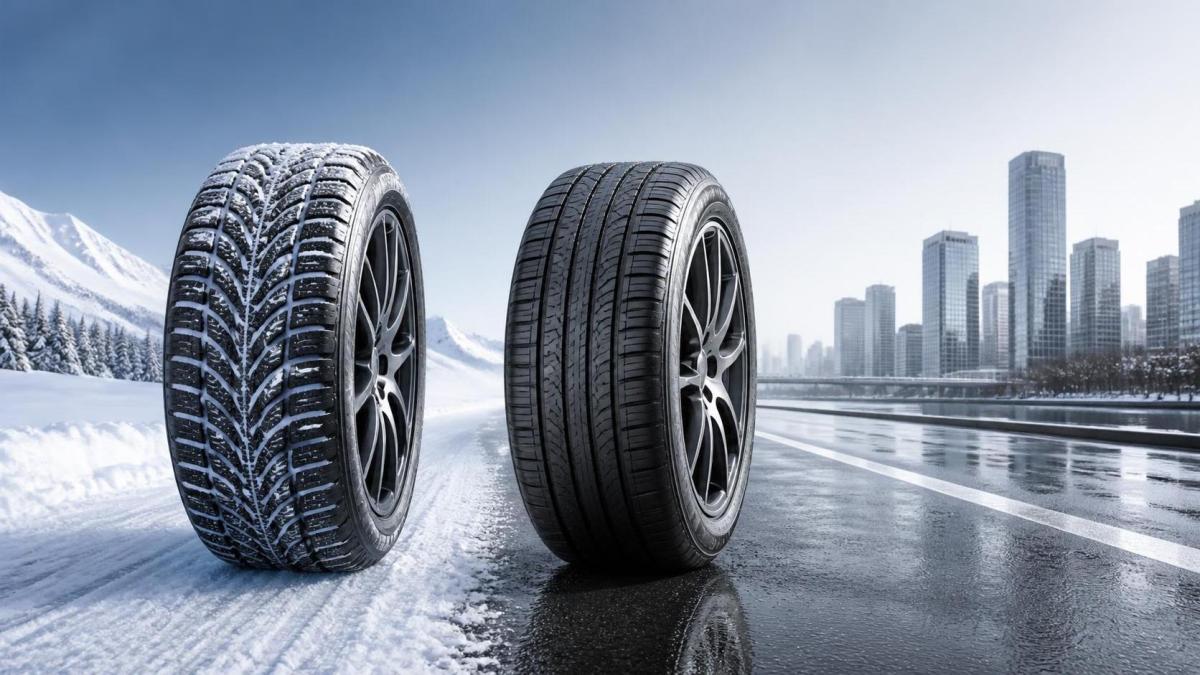
A winter PCR tire is designed to remain pliable at lower temperatures. Its tread generally uses a high density of sipes, narrow cuts that create additional biting edges. These edges help the tire engage with compacted snow and improve grip as the contact patch passes over wet, cold, or uneven surfaces.
The pattern is also arranged to manage snow and slush. Snow-to-snow contact can provide useful traction when the tread blocks can pack and release snow correctly. Deep grooves and open channels then help move slush and water away from the tire footprint. This is why a winter tire can offer more predictable braking and cornering on snowy roads than an all-season tire with a similar-looking tread depth.
That advantage is conditional. Winter tires are not a substitute for prudent speed, proper inflation, or vehicle stability systems. On polished ice, all tires have limited grip. A winter tire improves the margin available to the driver; it does not eliminate the surface risk.
All-season tires use a compound and tread design intended to work across a broader temperature range. Their construction is a compromise by design: they need acceptable wet traction, dry-road stability, tread life, ride comfort, and moderate cold-weather capability without being optimized for prolonged snow and ice. For many passenger vehicles, that compromise is entirely appropriate. It becomes less appropriate when winter road conditions are frequent or severe.
Use Route Conditions to Decide, Not Just Regional Weather
Weather reports can be misleading for tire selection. A city may have relatively mild daytime temperatures but still produce cold early-morning roads, shaded sections, bridge icing, or repeated freeze-thaw cycles. Conversely, a location with occasional snowfall may keep main routes cleared quickly enough that all-season tires remain practical for drivers who can avoid travel during severe events.
Three questions usually produce a clearer decision than a general climate label:
- Does the vehicle need to operate on snow-covered or icy roads rather than wait for roads to clear?
- Are overnight and early-morning temperatures regularly low enough to reduce all-season compound flexibility?
- Does the route include hills, rural roads, secondary streets, or poorly maintained access roads?
If the answer is yes to more than one of these questions, winter tires deserve serious consideration. This is particularly true for vehicles carrying families, commuters with fixed schedules, company cars that cannot easily defer trips, and dealers supplying areas with a clear winter season.
For a passenger car used mostly in temperate areas, on maintained roads, with limited exposure to snow and ice, all-season tires often simplify ownership. There is no seasonal tire change, no need to store a second set, and no risk that winter tires remain fitted through long periods of warm weather. The buyer accepts lower snow and ice capability in exchange for convenience and broader annual use.
Where All-Season Tires Are Commonly Overestimated
The term “all-season” can create an expectation of equal performance in every season. In practice, it describes a broad operating range, not winter-equivalent performance. An all-season PCR tire may handle cold rain, light snow, and occasional slush competently, but this does not mean it will brake, turn, or climb like a dedicated winter tire on compacted snow or ice.
Another common mistake is focusing only on drive traction. A vehicle may pull away from a stop on an incline yet still require much more distance to stop or remain stable through a bend. Four-wheel drive can help acceleration, but it does not provide the braking and lateral grip created by a winter-appropriate tire compound and tread.
Tread depth also needs careful interpretation. A worn tire may still meet a legal minimum threshold while having reduced ability to clear water and slush. For winter use, buyers should inspect wear across the whole tread, not just the most visible central grooves. Uneven wear may point to inflation, alignment, suspension, or rotation issues that should be corrected before a new seasonal set is installed.
Seasonal Changeover Is Part of the Cost Calculation
Winter tires involve more than the purchase price. A complete decision includes seasonal fitting, balancing where needed, storage, and fleet scheduling. Yet running a winter set during the cold season can also reduce wear on the all-season or summer set, because each set is used for fewer months. The comparison should be made over the ownership period, not as a one-time tire invoice.
Warm-weather operation changes the equation. Winter compounds and aggressive siping are intended for cold conditions. When used through extended warm periods, they can wear faster and may feel less precise on dry roads than an all-season tire. Removing them after the winter operating period protects both their intended performance and their service life.
For fleets and distributors, demand planning matters as much as individual fitment. Winter tire programs should account for the vehicle parc, local weather exposure, storage capacity, fitment lead times, and the availability of matching sizes. A mixed policy can be appropriate: winter tires for vehicles serving exposed routes, all-season tires for low-mileage urban vehicles, and clear criteria for when drivers must switch.
Do Not Mix Tire Categories or Axle Strategies Casually
Ideally, four matching winter tires should be fitted to a passenger car. Fitting winter tires only to the drive axle may improve traction when starting, but it can create a front-to-rear grip imbalance during braking or cornering. The vehicle may then behave less predictably in an emergency maneuver.
Size, load index, speed rating, and rim compatibility must remain suitable for the vehicle. Seasonal changes should not become an excuse to use an unsuitable specification. The same discipline applies across commercial applications: a bad-road truck tire such as HD769 addresses a different vehicle class and duty cycle, with reinforcement intended to resist damage on demanding road surfaces. Its purpose should not be confused with the cold-weather traction requirements of a passenger car radial tire.
For either tire type, correct inflation pressure is essential. Underinflation can increase heat, shoulder wear, and handling instability; overinflation can reduce the effective contact patch and worsen ride quality. Drivers should use the vehicle manufacturer’s recommended pressure guidance, adjusted only where the vehicle documentation provides a load-related instruction.
A Straightforward Selection Rule
Choose winter PCR tires when winter mobility is a requirement: regular travel in low temperatures, snow-covered routes, icy access roads, steep terrain, or schedules that cannot wait for road treatment. Choose all-season tires when the operating area has mild winters, roads are generally cleared, snow exposure is limited, and the convenience of one annual tire set outweighs the need for maximum winter traction.
The most expensive outcome is often not buying the higher-priced tire. It is choosing a tire whose operating window does not match the road conditions the vehicle must handle. A realistic review of route exposure, temperature, driving schedule, and seasonal maintenance capacity leads to a more reliable choice than any broad “one tire for every season” claim.
Chat Online