


Which HD161 specifications should appear on a distributor listing?
Which HD161 Specifications Should Appear on a Distributor Listing?
A distributor listing for the HD161 should do more than name the tire. Buyers need specifications that confirm fitment, workload capability, terrain suitability, and commercial availability before requesting a quotation.
For tire distributors, agents, and dealers, incomplete product data creates avoidable delays. A clear HD161 listing helps sales teams compare alternatives, answer technical questions, and reduce incorrect orders.
Start With the Specifications Buyers Use to Confirm Fitment
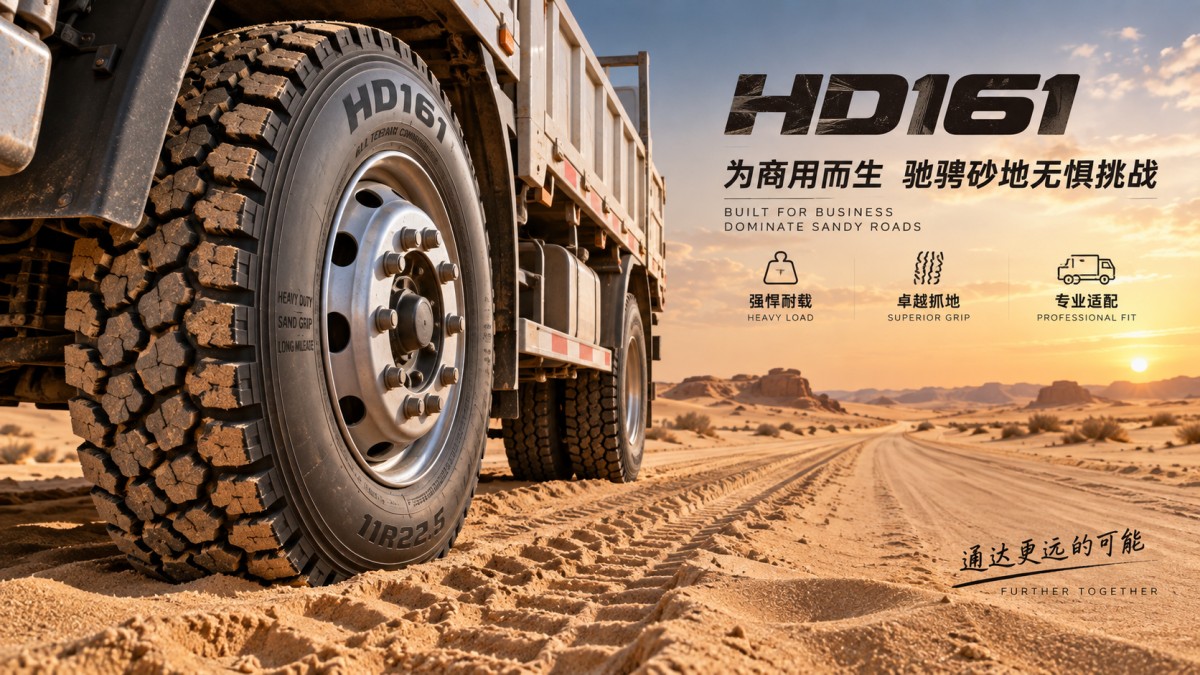
The first priority on an HD161 distributor listing is accurate size information. Tire size determines vehicle compatibility, rim selection, clearance requirements, replacement suitability, and the customer segment that the product can serve.
List the complete tire designation exactly as marked on the sidewall. Do not shorten technical markings, omit LT classifications, or replace standard tire notation with informal descriptions that confuse purchasing teams.
For example, a size such as 7.50R16LT communicates several essential details. It identifies the nominal section width, radial construction, rim diameter, and light-truck-oriented service category for buyers.
The listing should also state the approved rim specification. This helps distributors confirm whether existing wheels are suitable and prevents customers from assuming that every tire of a similar size fits the same rim.
Where applicable, include overall diameter, section width, tread depth, rolling circumference, and static loaded radius. These measurements are especially useful for replacement projects, fleet maintenance, and vehicle conversion work.
HD161 product pages should clearly identify whether the tire is intended for single-wheel, dual-wheel, steer, drive, trailer, or mixed-service applications. This context is often as important as the size itself.
A distributor should avoid listing only a pattern name and size. Customers searching for HD161 specifications usually need enough data to determine whether the tire can safely perform in their operating environment.
Load Index, Ply Rating, and Inflation Data Need Full Context
Load capacity is a central purchase criterion for commercial tire buyers. An HD161 listing should display the load index, maximum load, ply rating, and maximum inflation pressure together rather than separately.
When both single and dual service ratings apply, show each value clearly. Buyers need to know that carrying capacity changes according to mounting configuration and should not rely on one generalized figure.
For a 7.50R16LT specification, an example format could state load index 112/107, with 1,120 kg in single service and 975 kg in dual service.
Maximum cold inflation pressure should appear in both kPa and psi whenever international buyers are expected. Dual-unit presentation reduces interpretation errors between regional markets and fleet operating standards.
An 8PR rating, for example, indicates a tire designed for demanding load conditions. However, distributors should not describe ply rating as the sole measure of capacity or durability.
Actual safe loading also depends on tire size, pressure, wheel position, vehicle axle limits, operating speed, road conditions, and maintenance discipline. A precise listing helps customers apply these limits responsibly.
Include a brief note instructing buyers to follow vehicle manufacturer recommendations and local regulations. This protects the distributor from oversimplified assumptions while reinforcing a professional, technically responsible sales approach.
For HD161 listings aimed at fleet customers, add a load-and-pressure table when available. This is more useful than promotional language because it supports daily operating decisions and maintenance planning.
Explain the Tread Pattern Through the Customer’s Working Conditions
Pattern descriptions should answer a practical question: where will the tire work best? The HD161 tread design should be connected to terrain, traction needs, handling expectations, and service conditions.
If the pattern is designed for sandy ground, say so directly. Customers operating in desert areas, construction access roads, agricultural sites, or coastal locations need terrain-specific guidance before buying.
A tire intended for sand conditions should be described in terms of flotation, directional control, traction continuity, and resistance to digging into loose surfaces. These benefits are more meaningful than vague claims.
Distributors should identify important limitations as well. A specialized sand-oriented tread may not deliver the same results as a highway tire on long-distance paved routes or high-speed urban delivery work.
This balanced explanation improves customer trust. It also reduces return risk because the buyer understands whether the HD161 is a dedicated terrain solution or a general-purpose commercial tire.
For a relevant example, the SAND GRIP tire is offered in 7.50R16LT for sand conditions, where tread geometry supports more controlled handling on loose surfaces.
Its polyester construction should be presented as a structural feature, not an unsupported slogan. Buyers benefit from knowing that the carcass design contributes to sidewall strength, ride comfort, and service life.
When describing tread performance, avoid claiming universal superiority. Instead, define the use case precisely and allow distributors to match the HD161 specification to the customer’s route, vehicle, and load profile.
Construction, Speed Rating, and Product Positioning Build Buyer Confidence
Construction information belongs prominently on every distributor listing. State whether the HD161 uses radial or bias construction, along with key carcass materials and any reinforced sidewall or belt features.
Radial construction is particularly relevant to buyers comparing heat management, ride characteristics, tread contact, rolling resistance, and expected service behavior with other commercial tire options.
For products using polyester in the tire body, explain the practical value carefully. Strong polyester construction can support durability, sidewall integrity, and a more comfortable operating experience under suitable conditions.
The speed rating should be shown beside load information, not hidden in a technical appendix. A speed symbol such as R communicates a maximum certified operating speed category.
Speed ratings do not override load limits, inflation requirements, or road conditions. A professional HD161 listing makes this clear, particularly when dealers sell into mixed regional markets.
Buyers also need a concise application statement. Specify relevant vehicle types, such as light commercial trucks, utility vehicles, off-road support vehicles, or vehicles regularly operating on sandy access routes.
Do not position a specialized tire as suitable for every vehicle. Accurate positioning creates stronger distributor relationships because agents can confidently recommend the product without overpromising on performance.
Where the manufacturer offers multiple sizes or related patterns, link to the broader range. This helps dealers compare alternatives while keeping the primary HD161 page focused and easy to scan.
Certifications, Supply Information, and Commercial Details Matter Too
Technical specifications influence product selection, but supply reliability determines whether distributors can build a dependable business around the HD161. A strong listing should address both areas.
List available certifications accurately, including applicable regional approvals, quality-management standards, labeling requirements, and export documentation. Never display certification marks unless they apply to the specific product and destination market.
For Europe and Asia, distributors often need confirmation of market-specific compliance before placing orders. Providing this information early avoids quotation delays and prevents stock from being allocated to unsuitable markets.
The listing should identify country of origin, manufacturing capability, minimum order quantity, packaging method, lead time, and container loading information where these details are available for commercial enquiries.
It is also useful to state whether private labeling, branding support, pattern exclusivity, or regional distribution arrangements can be discussed. These factors may influence an agent’s decision more than a minor price difference.
A manufacturer with dedicated logistics routes can provide an operational advantage, but distributors should still request confirmed delivery terms, port options, transit estimates, and shipment documentation for each order.
Jinan Xinkunyu International Trading Co., Ltd. has experience producing semi-steel radial tires, truck tires, and special tires, supporting buyers who require product options across several commercial applications.
However, each HD161 enquiry should be handled with product-specific confirmation. Availability, certification, production scheduling, and delivery conditions can differ by tire size, market destination, and order volume.
Use a Listing Format That Makes Sales Conversations Faster
The best HD161 distributor listing is structured for rapid comparison. Put core specifications near the top, then explain application benefits, commercial information, and ordering requirements in a logical sequence.
A practical specification block should include pattern name, tire size, construction, ply rating, load index, load capacity, pressure, rim, speed rating, and recommended operating conditions.
For the 7.50R16LT sand-focused version, the key figures can include 8PR, 112/107 load index, 1,120/975 kg load capacity, 450 kPa or 65 psi pressure, and 6.00G rim.
Use tables for numerical data and short paragraphs for application guidance. This format supports both search engine visibility and real purchasing workflows, especially when dealers need to forward information quickly.
Include clear enquiry fields for destination country, required quantity, vehicle application, expected delivery date, and branding needs. These details allow suppliers to return more accurate quotations and technical recommendations.
Keep terminology consistent across catalogues, websites, quotations, and product labels. Inconsistent size, load, or pattern descriptions can undermine buyer confidence even when the tire itself is well suited.
Finally, review listings regularly against current factory data. A tire page should reflect the actual sellable specification, rather than outdated marketing copy that creates technical or supply misunderstandings.
Conclusion
An effective HD161 distributor listing should make a buyer’s decision easier. Size, rim, construction, ply rating, load capacity, pressure, speed rating, tread purpose, certifications, and supply details all deserve clear treatment.
For distributors and agents, the goal is not simply to attract traffic for HD161 searches. It is to provide dependable product information that supports correct fitment, better recommendations, and commercially confident purchasing decisions.
Chat Online