


Replace all-season tires before the legal limit when damage, aging, uneven wear, or reduced traction makes them unsuitable for your driving conditions. Legal tread alone cannot establish safety.
Your all-season tires may still have legal tread, but does that mean they’re ready for another rainy commute or cold-weather road trip? Tread depth is only one part of tire safety.
Age, cracking, uneven wear, and declining wet-road traction can all signal that replacement is due before you reach the legal limit. Knowing what to check helps you avoid unnecessary purchases.
This guide explains the warning signs, how driving conditions affect replacement timing, and when a professional inspection can help you decide whether to keep your tires or replace them.
How much tread is enough for the roads you actually drive?
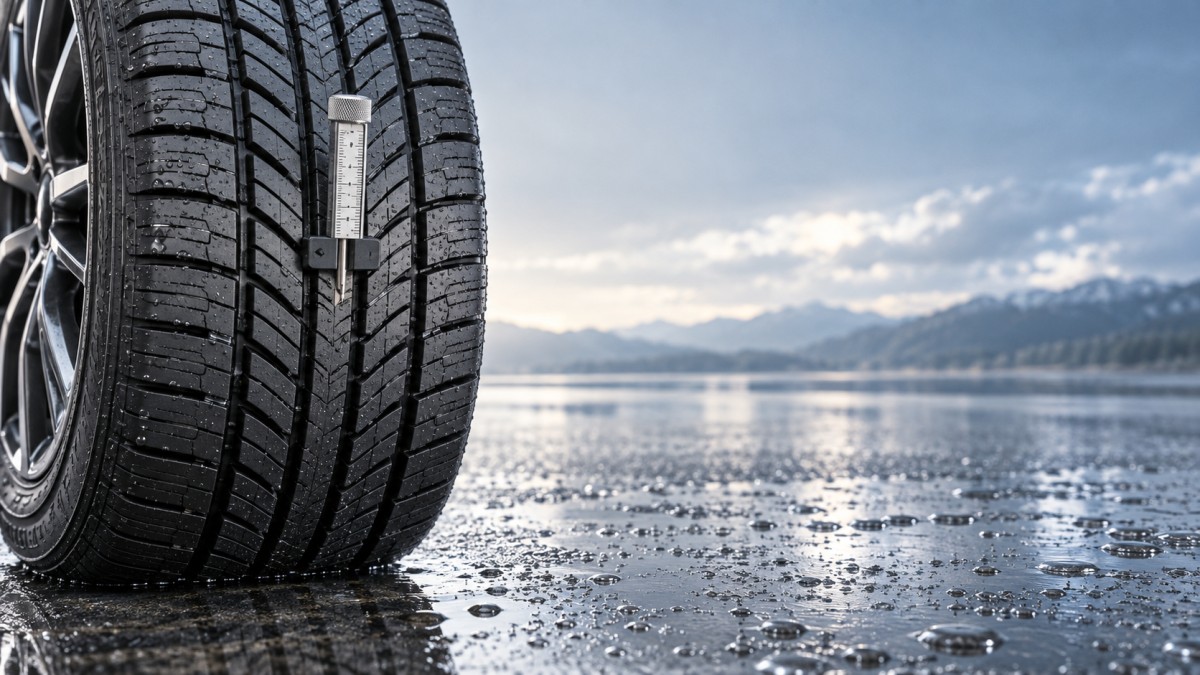
A legal tread minimum is an enforcement threshold, not a promise of dependable grip. Your replacement decision should reflect rain, snow, speed, and tire condition.
In many US jurisdictions, the minimum is 2/32 inch, approximately 1.6 millimeters. Requirements vary by location and vehicle, so check the rules where you drive.
As tread becomes shallower, grooves have less capacity to move water away from the contact patch. Wet braking and resistance to hydroplaning can consequently deteriorate.
If you regularly drive on wet highways, consider replacement around 4/32 inch, approximately 3.2 millimeters. Treat this as a practical planning point, not a universal safety cutoff.
For snow, approximately 5/32 inch, or 4 millimeters, is a useful replacement consideration. Adequate depth still cannot make every all-season tire suitable for severe winter conditions.
These figures help you plan rather than predict an exact failure point. Tire design, road surface, water depth, inflation, and vehicle speed also affect traction.
For example, tires measuring 3/32 inch deserve replacement consideration before a rainy motorway trip, even if local law allows you to continue using them legally.
Which warning signs mean you should stop driving?
A sidewall bulge, exposed cords, or tread separation calls for immediate action regardless of remaining tread. Stop driving on that tire and arrange appropriate assistance.
Do not assume a deep tread makes impact damage harmless. A pothole or curb strike can damage internal structures without leaving an obvious external cut.
Sudden vibration, repeated pressure loss, or a new pulling sensation also needs prompt investigation. These symptoms can involve tire damage, wheel problems, or suspension faults.
If symptoms begin suddenly or become severe, pull over somewhere safe. Use roadside assistance when necessary rather than continuing at speed to test the tire.
A puncture does not automatically require replacement, but repairability depends on its location, size, and internal damage. A qualified technician should inspect the dismounted tire.
Sidewall and shoulder punctures generally fall outside accepted repair areas. Driving while severely underinflated can also ruin a tire that initially had a repairable puncture.
Can an older tire be unsafe even with plenty of tread?
Yes. Rubber and internal components age through time, heat, environmental exposure, and use. A low-mileage tire can retain deep grooves while its condition gradually deteriorates.
Check the manufacturing date on the sidewall. On tires carrying a DOT date code, the final four digits identify the production week and year respectively.
For example, 2320 means the twenty-third week of 2020. The complete date marking may appear on only one side, sometimes facing inward on the vehicle.
Follow both the vehicle maker’s and tire manufacturer’s age guidance. Some specify replacement around six years; others recommend annual professional inspections after five years of service.
Some manufacturers set ten years from manufacture as an outer replacement limit, including spare tires. That limit does not guarantee suitability until the tenth year.
Visible cracking deserves assessment, particularly when cracks are deep, widespread, or accompanied by other damage. Appearance alone cannot reliably reveal the tire’s complete internal condition.
If you cannot establish a tire’s age or storage history, arrange an inspection before demanding use. This is particularly relevant when buying a used vehicle.
How do you check tread without missing the worst area?
Use an inexpensive tread-depth gauge and measure several main grooves across each tire. Repeat measurements at multiple points around the circumference to identify localized wear.
Record the lowest relevant reading rather than averaging the results. A healthy center measurement can conceal worn inner shoulders, especially when alignment problems develop unnoticed.
Wear bars provide another useful reference: when adjacent tread becomes flush with these raised bars, the tire has reached the indicator depth, commonly 2/32 inch.
A coin check offers a rough screening method, but a gauge gives clearer measurements. Neither method replaces inspection for damage, cracking, or unusual wear patterns.
Check pressures when tires are cold, using the vehicle placard or owner’s manual. The maximum pressure printed on the tire sidewall is not your routine inflation target.
Uneven wear calls for investigation of inflation, alignment, balance, or suspension. Correcting the cause protects replacement tires, but cannot restore rubber already worn away unevenly.
Does declining traction always mean you need new tires?
Repeated wheelspin during ordinary acceleration, longer-feeling wet stops, or easier sliding can indicate reduced grip. Arrange an inspection rather than deliberately testing traction on public roads.
First check inflation and inspect for uneven wear or contamination. A technician can help distinguish tire deterioration from problems involving brakes, suspension, or wheel alignment.
Think about changes in your driving needs, too. Tires acceptable for occasional dry local journeys may be a poor choice for frequent wet highway travel.
For regular snow or ice, consider dedicated winter tires appropriate to local conditions. All-season tires offer compromise performance, and extra tread cannot overcome every compound limitation.
The three-peak mountain snowflake marking indicates a qualifying snow-traction standard. It does not guarantee strong ice braking or equal performance among every tire carrying it.
Should you replace two tires or all four?
Replacing all four makes sense when age, wear, or damage affects the entire set. Replacing fewer may be appropriate when the remaining tires are suitable.
Check your vehicle manufacturer’s requirements before deciding, particularly with all-wheel drive. Differences in tire circumference can affect drivetrain operation, and permitted variations depend on the vehicle.
If replacing only two tires is permitted, standard guidance generally places the new pair on the rear axle to reduce the risk of wet-road instability.
Ask the installer to confirm size, load index, speed rating, and compatibility. Match the vehicle’s requirements rather than selecting solely by price or advertised mileage.
Application matters as well: the HD161 in ST235/85R16 carries an ST designation for special-trailer service. It should not be selected as a passenger-car all-season replacement.
Its listed features emphasize wear resistance, broader shoulders, and reinforced construction for load capacity. Those claims do not establish passenger-car fitment or wet-weather braking performance.
What should you ask during a professional inspection?
Ask for tread measurements across every tire, manufacturing dates, and an explanation of any damage. Specific findings make the recommendation easier to understand and evaluate.
Bring up pressure loss, vibration, recent impacts, and your usual driving conditions. These details help the technician decide whether further inspection or dismounting is necessary.
Request a clear distinction between immediate replacement and monitoring with a planned recheck. If uneven wear exists, ask what correction is needed before fitting replacements.
For a tire with adequate tread, no damage, acceptable age, and suitable performance, continued use with regular checks may be reasonable under the manufacturer’s guidance.
Make the decision before your next demanding journey
Replace all-season tires when damage, age guidance, or insufficient traction for expected conditions justifies it. Do not wait for every tire to reach the legal minimum.
Measure the weakest areas, check age and pressure, and account for upcoming weather. When findings remain uncertain, a professional inspection can support a practical replacement decision.