


What wet braking checks matter for All Season Passenger Tires?
What Wet Braking Checks Matter for All Season Passenger Tires?
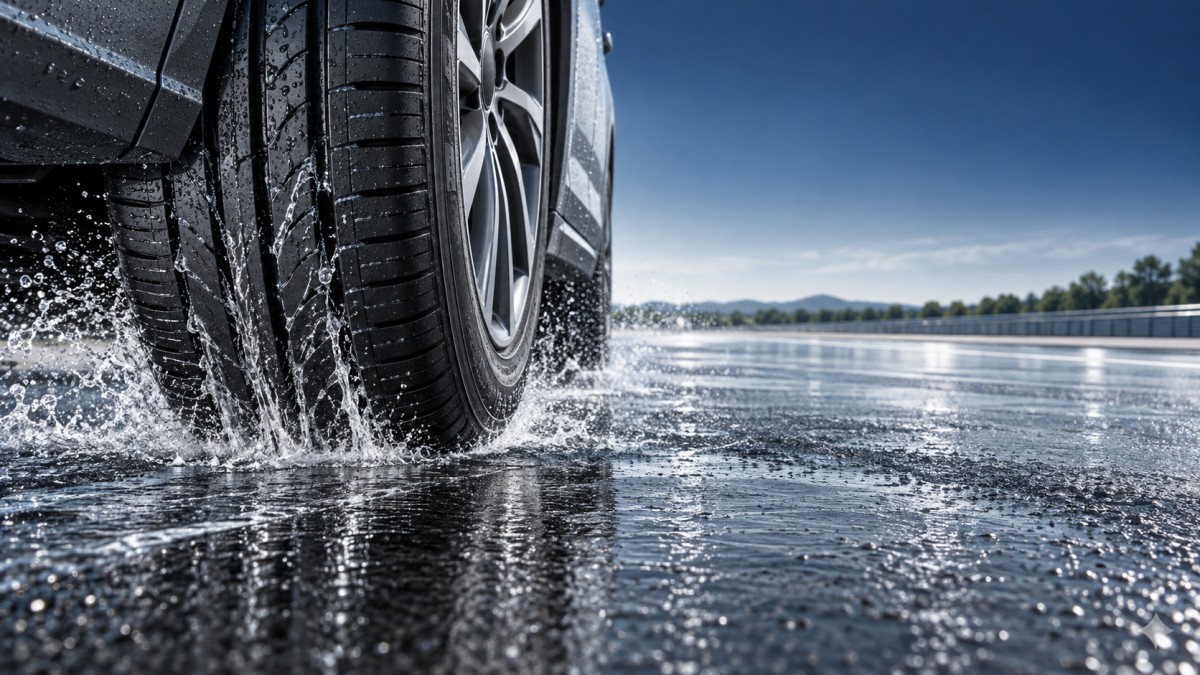
Wet braking checks for All Season Passenger Tires should confirm more than a short stopping distance. Quality and safety teams must verify repeatable traction, stable handling, controlled heat, and consistent behavior.
The central question is whether the tire can maintain predictable braking performance when water, temperature, road texture, inflation pressure, and tread wear vary. A single laboratory result is not enough.
For quality-control personnel, the most meaningful evaluation combines standardized wet braking testing with manufacturing inspection, tire-to-tire consistency checks, and risk-based review of real operating conditions.
Start With Wet Stopping Distance, but Test the Right Conditions
Wet stopping distance remains the most visible safety metric because it directly reflects risk. However, the result only matters when the test setup represents the intended passenger vehicle application.
Inspectors should document vehicle type, tire size, load, inflation pressure, test speed, water depth, pavement condition, ambient temperature, and brake system status before comparing results.
A tire can perform well on smooth, uniform asphalt yet lose relative performance on coarse aggregate, polished concrete, or uneven road surfaces. Testing should reflect these differences.
Road wetness must also be controlled. A thin water film creates different traction demands than standing water, where tread channels must evacuate water quickly enough to resist hydroplaning.
Repeat testing is essential. One unusually good run may result from small changes in surface friction, driver input, water distribution, or vehicle speed rather than superior tire construction.
Quality teams should establish acceptance limits based on average performance and variation between runs. Excessive variation can signal compound inconsistency, tread irregularity, or unstable carcass behavior.
Check Water Evacuation and Hydroplaning Resistance
Wet braking depends on the tire's ability to break through water and create direct rubber-to-road contact. Tread design is therefore a major inspection point for All Season Passenger Tires.
Evaluate the depth, width, continuity, and cleanliness of circumferential grooves. These channels carry water away from the contact patch during straight-line braking and high-speed travel.
Transverse grooves and sipes also matter because they create additional edges that grip wet pavement. Their geometry must remain open and effective under compression, load, and temperature changes.
Inspectors should review whether mold wear, flashing, blocked vents, or dimensional variation affects groove shape. Small manufacturing deviations may reduce water flow and make performance less consistent.
Tread pattern checks should include measurements at multiple locations around the tire. Uneven groove depth can produce localized water retention and contribute to unpredictable braking or pulling.
Hydroplaning assessment should not be treated as separate from braking. When water cannot escape efficiently, the contact patch loses friction before the vehicle reaches the planned braking point.
For operational risk assessment, compare wet braking results at different speeds. A tire that remains stable at moderate speed but deteriorates sharply at higher speed deserves closer engineering review.
Verify Compound Consistency Across Production Batches
The tread compound determines how effectively rubber conforms to microscopic pavement texture. In wet conditions, compound behavior is often as important as visible tread design.
A suitable all-season compound must retain flexibility in cooler rain while resisting excessive softening during warmer conditions. Poor balance can reduce grip, accelerate wear, or create heat-related instability.
Quality-control teams should monitor compound formulation, mixing time, temperature history, dispersion quality, cure conditions, and batch traceability. These controls help explain changes in wet braking performance.
Hardness measurements provide useful screening data, but they should not replace braking tests. Similar hardness values can still hide differences in polymer distribution, filler dispersion, or curing quality.
Review laboratory records for rheology, tensile properties, elongation, abrasion resistance, and rebound characteristics. Together, these indicators can identify material changes before they become field safety problems.
Temperature-conditioned testing is particularly valuable. Tires should be evaluated after exposure to cool, moderate, and warm conditions because rain does not occur at one predictable temperature.
When wet braking shifts between batches, investigators should first compare material lot records and cure data. Pattern changes are important, but compound variation often explains unexpected performance movement.
Assess Tread Wear and Remaining Wet-Safety Margin
New-tire wet braking results do not fully describe service safety. As tread depth declines, water evacuation capacity decreases and the tire may approach hydroplaning earlier.
Inspectors should test representative tires at multiple tread depths, including new condition, mid-life wear, and near-replacement condition. This reveals how much wet traction remains throughout service life.
Pay close attention to shoulder wear and irregular wear patterns. These areas influence lateral stability during braking maneuvers, especially when the driver brakes while changing lanes or turning.
Wear indicators must be clearly visible and accurately positioned. They support practical replacement decisions, but safety teams should communicate that legal minimum depth may not equal optimal wet performance.
Comparing worn-tire results between production batches can uncover deeper quality issues. A tire may meet new-condition requirements while losing wet braking capability faster than expected during normal service.
Vehicle alignment, suspension condition, rotation practice, and inflation control also influence wear. Product evaluation should distinguish tire design concerns from vehicle maintenance factors that alter the contact patch.
Confirm Inflation, Load, and Heat Effects
Wet braking performance changes when inflation pressure or vehicle load moves away from the intended specification. These factors affect footprint shape, groove opening, carcass deflection, and braking stability.
Underinflation can increase heat generation and alter tread contact, while overinflation may reduce the effective contact area. Both conditions can compromise wet traction and directional control.
Testing should include nominal pressure plus realistic tolerance conditions. This provides safety managers with a more useful view of how All Season Passenger Tires perform in imperfect daily operation.
Heat buildup requires attention during repeated braking. A tire that performs well on the first stop may show reduced stability after several high-energy stops if tread and carcass temperatures rise excessively.
Use controlled repeated-stop procedures where appropriate, recording temperature, stopping distance, steering correction, and visible tread condition. Watch for odor, surface tearing, blistering, or unusual deformation.
Load testing should reflect the heaviest approved passenger vehicle use, including passengers and cargo. Wet braking under lightly loaded conditions alone can overstate real-world safety performance.
Look Beyond Straight-Line Braking Stability
Drivers rarely brake on a perfectly straight, uniform road. Wet safety checks should include steering response, lane-change stability, recovery behavior, and resistance to sudden rear or front axle slip.
During braking evaluation, record whether the vehicle pulls, wanders, oscillates, or requires abnormal steering correction. These symptoms may indicate non-uniformity, tread imbalance, or inconsistent construction.
Quality teams should also examine left-to-right tire matching. Significant performance differences between tires on the same axle can reduce control even when each individual tire meets baseline requirements.
Noise and vibration observations can support diagnosis, although they are not direct wet-grip metrics. Changes in noise or vibration may reveal tread irregularity or structural variation affecting road contact.
For broader fleet and commercial tire sourcing programs, product categories should remain clear. The PT20 is presented for heavy-duty tire applications and should be assessed under its own load, pressure, and use requirements.
Build a Practical Wet Braking Inspection Program
An effective program starts with a written specification defining target wet braking performance, permitted variation, applicable tire sizes, test methods, sampling frequency, and escalation requirements.
Incoming material controls should connect directly to finished-tire results. When a compound, reinforcement material, mold, or curing parameter changes, wet performance validation should be reviewed before release.
Production sampling should cover different shifts, presses, molds, and batches. Random sampling from only one stable production period can overlook variation that creates downstream safety exposure.
Keep records that connect test tires to complete manufacturing history. Traceability enables engineers to identify whether a performance issue is isolated, batch-related, equipment-related, or systemic.
Safety managers should define actions for marginal results. Options may include increased sampling, process adjustment, shipment hold, engineering review, customer notification, or retesting under controlled conditions.
External testing can strengthen confidence, especially for new designs or significant changes. Independent verification helps confirm that internal methods remain aligned with recognized safety and performance expectations.
Make Decisions Based on Repeatable Safety Evidence
The most important wet braking checks combine stopping distance, water evacuation, compound consistency, tread-wear behavior, pressure sensitivity, heat response, and vehicle stability during realistic wet conditions.
For quality-control and safety teams, the objective is not simply to achieve a passing result. It is to demonstrate that performance remains predictable across production variation and normal operating conditions.
When All Season Passenger Tires are evaluated through this broader framework, inspectors can identify weak safety margins earlier, improve corrective action decisions, and support safer vehicle operation in changing weather.
Chat Online