


What Tire Sizes Are Available?
Tire sizes are available in several measurement systems, and the correct range is determined first by the vehicle's approved fitment, then by wheel diameter, load requirement, clearance, and intended surface. Passenger cars, SUVs, light trucks, commercial trucks, trailers, agricultural equipment, and off-road vehicles all use different size families. A tire that physically mounts on a wheel is not automatically an acceptable replacement; its overall diameter, section width, load index, construction, and speed capability must suit the vehicle and application.
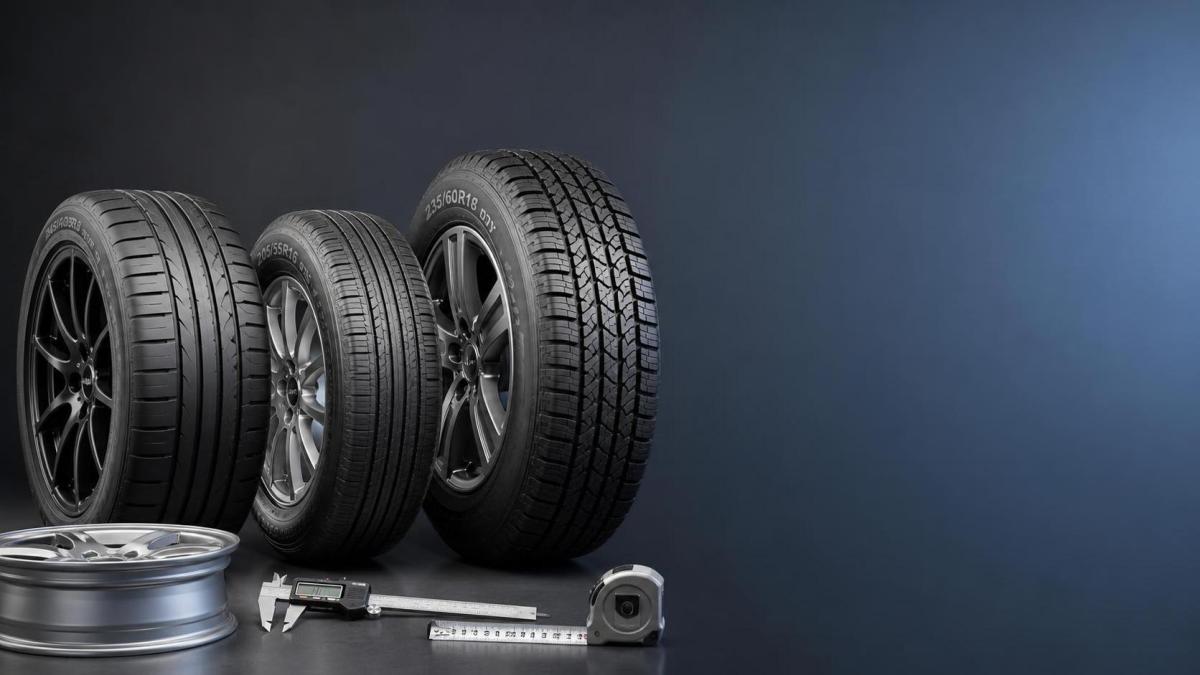
The size printed on a sidewall is the starting point for identifying what is available. Most modern passenger and light-truck tires use metric sizing, such as 225/65R17. In this example, 225 is the nominal section width in millimeters, 65 is the aspect ratio, R identifies radial construction, and 17 is the wheel diameter in inches. This code describes the basic dimensional format, but it does not by itself confirm load capacity, tread design, or whether the tire fits without interference.
Common Tire Size Families
Metric radial sizes are widespread on passenger vehicles, crossovers, SUVs, and many light trucks. Widths commonly progress in small increments, while aspect ratios determine how tall the sidewall is relative to the width. A 225/65R17 and a 225/55R17 have the same nominal width and wheel diameter, yet the second tire is substantially shorter because its sidewall is lower. That difference changes overall diameter, ground clearance, gearing indication, and the distance between the tread and suspension or bodywork.
Highway-oriented passenger tires often use moderate widths and relatively taller sidewalls where ride comfort, wet-road performance, and wheel protection matter. Performance-oriented fitments frequently use wider sections with lower aspect ratios, such as 235/45R18 or 245/40R19. These sizes can improve steering response when correctly matched to the wheel, but the reduced sidewall leaves less protection against pothole impacts and offers less tolerance for incorrect pressure.
Light-truck and SUV tires appear in both metric and flotation formats. A metric example such as 265/70R17 follows the same logic as a passenger tire. A flotation size, such as 31x10.50R15, states approximate overall diameter first, followed by section width in inches and wheel diameter. Flotation sizing is common where ground clearance, wider contact patches, and off-road traction are central concerns. Its stated dimensions are nominal; mounted measurements can change with rim width, inflation pressure, tread construction, and the load placed on the tire.
Commercial truck sizes use another familiar pattern. A marking such as 11R22.5 identifies an 11-inch-class section, radial construction, and a 22.5-inch rim. Low-profile commercial sizes such as 295/75R22.5 use metric width and aspect ratio, even though the rim is still expressed in inches. These tire sizes must be assessed with axle loading, dual-spacing requirements, wheel specification, intended position on the vehicle, and operating pressure. A tire suitable for a steer axle does not automatically have the tread pattern or service purpose required for a drive or trailer position.
Special-purpose tires extend beyond these common road formats. Industrial, agricultural, construction, trailer, turf, and compact-equipment tires may show aspect ratio, ply rating, rim size, load range, or application codes in different combinations. The sidewall marking needs to be read as a complete specification rather than reduced to a single width or diameter figure.
Reading Dimensions Beyond the Main Code
The main size mark does not give the full physical envelope. Three dimensions are especially useful when checking fitment: section width, overall diameter, and rolling circumference. Section width is measured across the inflated tire's widest sidewall area, excluding protective ribs or lettering where the measurement standard requires. It is not the same as tread width. A tire with aggressive sidewall lugs can need more lateral clearance than a road tire with a similar stated section width.
Overall diameter is the inflated distance from one outer tread surface to the opposite side. It affects wheel-well clearance, effective gear ratio, ride height, and indicated road speed. Rolling circumference is related but not identical to free diameter because a loaded tire deflects at the contact patch. Vehicle calibration, especially where wheel-speed sensing is involved, can be affected when replacement circumference differs materially from the approved size.
For metric tires, approximate overall diameter can be estimated from the sidewall code:
Overall diameter in inches = wheel diameter + 2 × (section width × aspect ratio / 25.4)
For a 225/65R17 tire, the sidewall height is approximately 146 mm, obtained by multiplying 225 mm by 0.65. Doubling that height and adding the 17-inch wheel diameter produces an approximate unloaded diameter. The calculation is useful for comparing formats, but it should not replace the published mounted dimensions because carcass shape and tread depth influence the final result.
Width, Rim Width, and Clearance Work Together
A tire size is designed around an approved rim-width range. Mounting the same tire on the narrow end of that range tends to pull the sidewalls inward and can make the tread face more rounded. At the wide end, the sidewalls spread and the tread may sit flatter. Neither condition should be assumed to provide extra clearance: the widest point can move outward, while the tire's behavior under cornering and load changes as well.
Wheel offset and backspacing are separate fitment variables. A wider tire on a wheel with different offset may contact the suspension on the inside even when the outer fender area appears clear. Conversely, moving the wheel outward can create fender contact when steering is turned or when the suspension compresses. Clearance must be checked at full steering lock and through suspension travel, not only while the vehicle is stationary on level ground.
Diameter changes create a different set of conflicts. A taller tire can touch the rear of the wheel arch during steering, the front edge during compression, or an inner liner under articulation. Tread blocks, shoulder design, and sidewall protectors matter because the tire's widest or tallest point is not always obvious from a catalog dimension.
Load, Pressure, and Construction Are Part of the Size Decision
Two tires with similar dimensions can have very different working limits. Load index or load range, inflation-pressure requirements, carcass construction, and service description must support the actual axle load. Increasing a tire's physical size does not automatically increase its usable load capacity. A larger all-terrain tire with lower pressure capability may carry less load than a smaller commercial-oriented tire designed for higher inflation.
Ply rating remains common on specialty and off-road products, although it is a strength classification rather than a direct count of physical plies in every modern tire. A 6PR designation indicates a tire built for a higher-duty service class than lighter alternatives in the same product family. It should still be evaluated beside the published maximum load and specified pressure, because load capacity is tied to both size and inflation conditions.
For example, the all-terrain MX 618 is offered in 30x10-14, 31x10-15, 32x10-17, and 34x10-17 sizes. The listed dimensions show why a flotation-size label alone is incomplete: the available section widths range from 224 mm to 238 mm, overall diameters range from 767 mm to 860 mm, and the tread depth is 38 mm. Its 6PR construction, 18 PSI pressure specification, and size-specific maximum loads also need to remain part of the comparison when selecting an off-road fitment.
Pressure should never be copied simply because it is printed as a maximum or reference value on a different tire. The suitable cold inflation setting is determined by the tire's load-and-pressure relationship and the vehicle's approved guidance. Underinflation allows excessive flexing and heat buildup; excessive pressure can reduce the contact patch and make impact damage more likely on rough surfaces. Off-road pressure adjustments change tire shape and traction, so clearance and bead-retention limits deserve attention before any reduction from normal road pressure.
Replacing a Tire With a Different Size
The safest replacement is the exact size, load capability, construction type, and service category specified for the vehicle. Alternative sizes are sometimes possible, but they require more than a comparison of wheel diameter. A useful assessment considers the following points:
- Overall diameter: Compare the published diameter and rolling circumference with the original fitment. A taller replacement may alter clearance and speed indication; a shorter one reduces ground clearance and changes effective gearing.
- Wheel compatibility: Confirm the candidate tire's approved rim-width range and verify that the wheel's diameter, width, profile, and condition are suitable.
- Axle capacity: The combined capacity of the tires on an axle must meet the axle's loaded condition. Matching only the vehicle's empty weight leaves little useful margin.
- Service use: Highway, gravel, mud, snow, mixed work sites, and sustained loaded travel place different demands on tread pattern, casing strength, heat resistance, and puncture protection.
- Paired fitments: Vehicles with different front and rear sizes, closely managed driveline systems, or dual rear wheels require extra care. A mismatched rolling circumference can create drivetrain stress or uneven load sharing.
Changing width and changing diameter should be treated as separate decisions. A wider tire may retain nearly the original diameter by using a lower aspect ratio. A taller tire may retain a similar width. Combining both changes magnifies clearance, load, and handling consequences. It also increases the chance that the nominal comparison looks acceptable while actual mounted dimensions do not.
Frequent Size Misreadings
A common error is reading 265/70R17 as a tire that is exactly 265 mm wide in every installation. The number is nominal and based on a defined measuring rim. Change the rim width and the mounted section width can change. The same applies to flotation tires: a 35x12.50R17 is not a guarantee of a precise 35-inch diameter under every condition.
Another error is treating the final number in a tire size as the tire's outside diameter. In 225/65R17, 17 is only the wheel diameter. The tire's total diameter is much larger because it includes two sidewalls and the tread. This misunderstanding often leads to incorrect comparisons between metric and flotation sizes.
Tread depth is also separate from tire diameter. A deep-lug off-road tire can have a similar carcass size to a road tire while measuring differently across the outer tread blocks. As the tread wears, diameter and rolling circumference gradually decrease. Mixing a substantially worn tire with a new tire on the same axle can create handling or drivetrain concerns, particularly where rolling-speed differences are significant.
Confirming an Available Size Before Installation
Start with the complete sidewall specification of the existing tire and the vehicle's designated fitment information. Record width, aspect ratio or flotation dimensions, construction, wheel diameter, load and speed markings, and whether the front and rear axles use the same size. Then compare the candidate's published mounted section width and overall diameter on the intended wheel, rather than relying only on the abbreviated size code.
When moving to a larger or wider tire, inspect the real installation space around suspension components, brake hoses, liners, fenders, and steering parts. The check must account for steering angle, compression, articulation, and any buildup of mud or stones expected in service. A fitment that clears cleanly in a workshop can rub after the tire deforms under load or when the vehicle travels over uneven ground.
Available tire sizes therefore span far more than a sequence of widths and rim diameters. The usable choice is the size whose actual mounted dimensions, wheel range, load rating, pressure requirements, tread purpose, and vehicle clearances all agree. Reading the complete specification turns a sidewall code into a reliable fitment decision.
Chat Online