

What should an OTR tire supplier's warranty cover for casing failures?
An OTR tire supplier’s warranty should cover casing failures caused by defects in materials or workmanship, with written rules for diagnosis, eligibility, compensation, and claim handling. That includes manufacturing-related separation, structural cord defects, and bead defects—not every casing failure regardless of operating conditions. When a tire is removed from a loader or haul truck, unclear coverage can leave procurement teams paying for a replacement while the cause remains disputed.
Before selecting an OTR Tire Supplier, ask for the warranty applicable to the exact tire model and intended duty. The essential purchasing question is whether the agreement explains what happens when the casing becomes unserviceable: who investigates, what evidence is required, how compensation is calculated, and which costs remain with the buyer.
Define covered casing defects before discussing exclusions
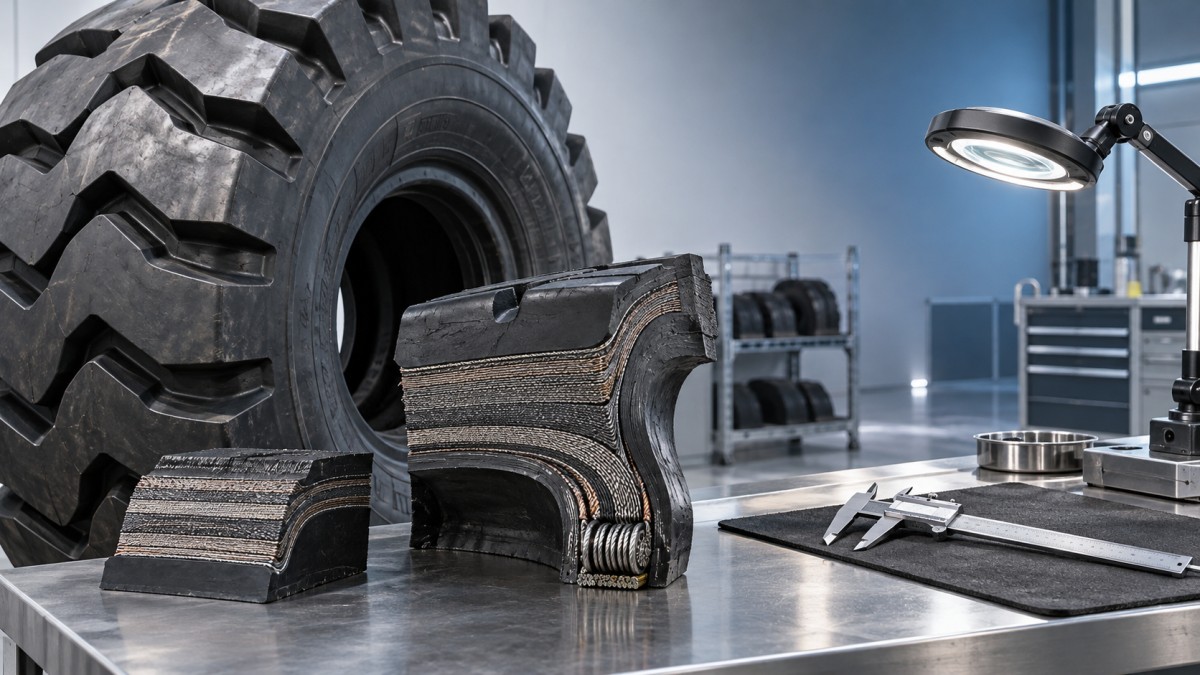
The casing is the tire’s structural foundation. Depending on construction, it includes the carcass plies or cords, bead assemblies, and associated structural components. A useful warranty identifies these areas rather than relying solely on a broad promise against “manufacturing defects.” Belt or breaker-related failures should also be addressed where applicable.
These are coverage categories to negotiate, not assurances that every supplier offers them. Avoid terms that automatically label every separation as heat damage or every bead failure as installation damage. Equally, a warranty should not imply that all visible structural damage proves a manufacturing fault.
A separation is a symptom, not a diagnosis
A tire can develop separation after prolonged underinflation, overload, excessive operating speed, impact damage, or a manufacturing-related bonding problem. More than one factor may contribute. The claim process therefore needs a documented assessment of the failure origin, not a rejection based only on photographs of the final damage.
Ask whether the supplier’s inspection considers the damage location, cord condition, evidence of penetration, innerliner condition, bead condition, and operating history. For applicable earthmoving tires, heat exposure may also require comparing actual duty with the tire’s approved load, speed, and TKPH or TMPH limits.
Where operating damage is cited, require a written explanation connecting the evidence to the failure. A generic statement such as “improper use” provides little basis for correcting fleet practices or accepting a rejected claim. The agreement should also provide an escalation route, such as a joint inspection or an agreed independent examiner, and specify responsibility for inspection costs.
Set coverage limits around the actual operating duty
A calendar warranty alone can be misleading. Establish when coverage starts—delivery, installation, or another documented event—and whether it also ends at a stated operating-hour limit, wear limit, or tire age. Confirm how unused inventory is treated, especially when large replacement tires remain in storage before installation.
The supplier should acknowledge the intended application before the order is placed. Relevant details include equipment type, axle position, maximum load, operating speed, haul distance, surface conditions, inflation requirements, and rim specification. Approval of a tire for that duty should be recorded rather than inferred from its size.
- Early-life failures: Ask whether confirmed defects qualify for full replacement or whether depreciation applies immediately.
- Later failures: Identify the wear or service-life threshold beyond which compensation stops.
- Replacement tires: Clarify whether they receive a new warranty period or only the remaining original coverage.
- Repaired or retreaded casings: Establish which coverage survives and which damage falls outside the original warranty.
If retreadability influences the purchase, distinguish a manufacturing-defect warranty from a separate casing or retreadability guarantee. One does not automatically include the other. Eligibility may depend on repair history, casing condition, and inspection standards.
Make the settlement calculation visible
“Pro rata compensation” is incomplete unless the contract defines the calculation. A wear-based adjustment may use remaining usable tread rather than total original tread depth. Buyers need to know the original measurement, removal threshold, measurement locations, and treatment of uneven wear.
Request a worked calculation using the proposed terms. It should identify whether compensation is based on the original invoice price, a current replacement price, or another agreed value. For an operating-hour formula, specify how hours are verified and how missing records affect eligibility. Also establish whether the remedy is a replacement tire, refund, repair, or credit against a future order.
The tire allowance and the claim’s total cost are separate issues. Freight, inspection, demounting, remounting, disposal, duties, and downtime may remain outside coverage. Negotiate these explicitly. Do not assume that acceptance of a manufacturing defect means reimbursement for every associated expense.
For cross-border purchases, specify where the failed tire must be sent, who pays transport initially, and whether those costs are reimbursed after approval. Requiring an entire large tire to be returned can materially affect the practical value of a claim.
Agree on evidence before a failure interrupts operations
A warranty becomes harder to use when documentation requirements emerge only after removal. Procurement should obtain the claim form and share it with maintenance staff while the tires are still in service.
- Identify the tire: Retain the invoice, model, size, serial or production identification, installation date, and equipment assignment.
- Record service conditions: Keep available inflation, load, operating-hour, maintenance, and repair records relevant to the duty.
- Preserve the failure evidence: Photograph the whole tire, identification markings, damaged area, and relevant rim condition before repairs or disposal.
- Follow the inspection instructions: Do not cut, repair, or discard the casing without authorization if doing so could remove evidence.
A suspected structural failure should be removed from service and handled by qualified tire personnel using appropriate procedures. Commercial evidence collection must not require reinflation or further operation of a potentially unsafe tire.
Agree on notification deadlines, acknowledgment times, inspection arrangements, and the expected decision period. Where laboratory examination extends the process, require status updates. An urgent replacement purchase should not cancel the original claim; replacement supply and warranty settlement should remain separate transactions.
Keep product specifications separate from warranty promises
Wear resistance, traction, and heat-dissipation features can support tire selection, but they do not define casing-failure coverage. This distinction matters when a supplier quotation includes both off-road tires and road-going truck tires.
For example, HD589 is listed as a TBR tire in size 385/65R22.5. Its stated features include a wide tread with an extra wear-resistant formula, wavy fine grooves for grip, and half-open shoulder patterns intended to support rigidity and heat dissipation. Those specifications do not establish OTR suitability or any particular casing warranty. Request category-specific application approval and warranty terms rather than transferring assumptions between products.
Resolve rejection and replacement terms before issuing the order
Exclusions for cuts, impacts, overload, underinflation, unsuitable rims, unauthorized repairs, and excessive heat should state their scope and the evidence needed to apply them. Ask whether an unrelated maintenance issue can invalidate the whole warranty, or whether it must have contributed to the claimed failure.
Before signing, obtain three documents: the model-specific warranty, the claim procedure, and the compensation schedule. Check that the quotation and purchase agreement identify which terms control if they conflict. A statement that coverage is “subject to factory approval” is not enough without review criteria, decision timing, and a dispute process.
Finally, ask how replacement supply works while a claim is pending, including availability and payment arrangements. Warranty approval cannot restore uptime if a suitable replacement is unavailable; procurement needs both an enforceable defect remedy and a workable replenishment plan.
Chat Online