


What production evidence should a passenger car tire manufacturer provide?
What Production Evidence Should a Passenger Car Tire Manufacturer Provide?
When sourcing tires, procurement teams need more than competitive pricing. They need verifiable production evidence that demonstrates consistency, compliance, capacity, and dependable delivery before committing purchase volume.
A credible Passenger Car Tire Manufacturer should substantiate every important claim with current documents, traceable records, product-level data, and access to technical clarification when questions arise.
For buyers, the objective is straightforward: reduce the risk of receiving inconsistent tires, missing market requirements, delayed shipments, or unsupported warranty claims after delivery.
The strongest suppliers do not rely on brochures alone. They provide evidence that connects factory capability, raw-material control, testing, inspection, shipment performance, and after-sales responsibility.
Start With Factory Identity and Actual Manufacturing Capability
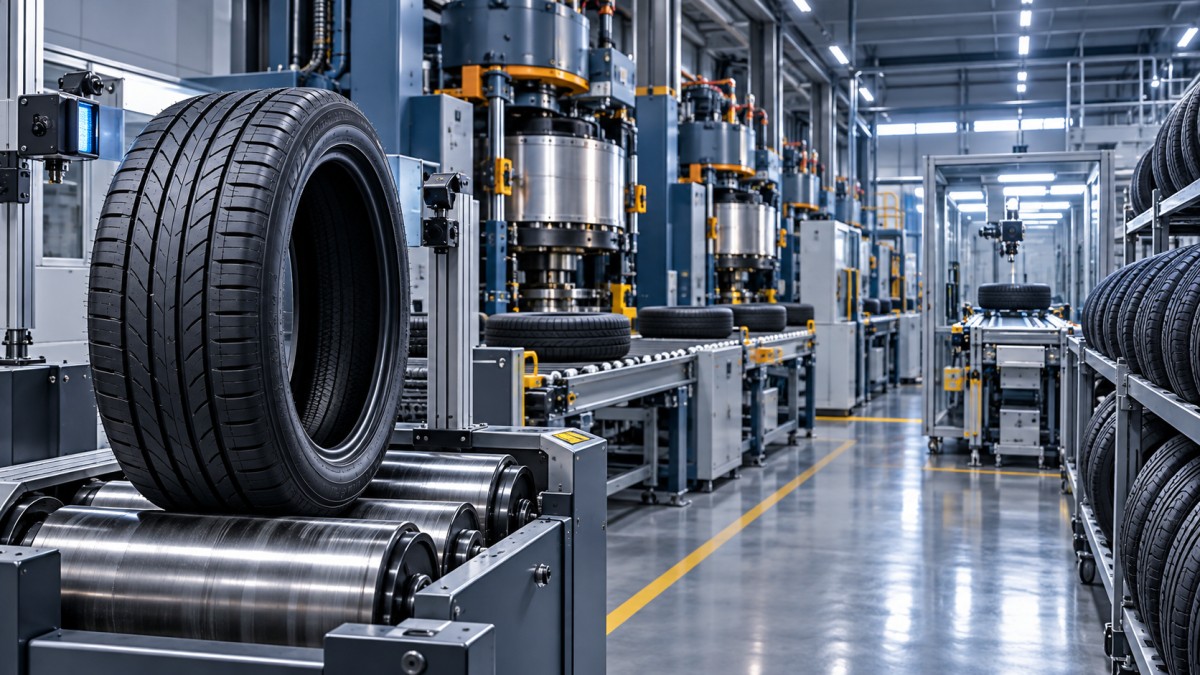
First, confirm that the company is genuinely connected to the production site rather than acting only as an intermediary with limited control over manufacturing decisions.
Ask for the legal factory name, registered address, production license details, factory photographs, production-line videos, and an organizational overview covering engineering, quality, export, and logistics teams.
These materials should be mutually consistent. A factory address on a certificate should match the address shown on business registration documents, inspection reports, and shipping paperwork.
Procurement teams should also request annual production capacity by tire category, including passenger car radial tires, truck tires, specialty tires, and relevant size ranges.
Capacity figures matter only when they are supported by practical evidence. Ask how many curing presses, building machines, mixing lines, and inspection stations operate at the plant.
A Passenger Car Tire Manufacturer should explain normal utilization rates, peak-season constraints, minimum order quantities, and realistic lead times for repeated orders rather than one-time samples.
Jinan Xinkunyu International Trading Co., Ltd., founded in 2001 and supported by engineering personnel and dedicated logistics lines, should provide buyer-specific capacity evidence for the requested passenger tire program.
Company scale can be useful context, but it is not a substitute for current production records. Buyers should focus on the exact factory, product category, and destination market.
Request Product Specifications That Can Be Checked Line by Line
Technical specifications are the foundation of product comparison. Every quoted passenger tire should have a detailed specification sheet linked to its pattern, size, load index, speed rating, and application.
The sheet should identify tire construction, casing structure, tread depth, section width, overall diameter, approved rim width, inflation conditions, and load-capacity references.
It should also state the intended vehicle segment and operating conditions. A tire designed for urban commuting may not perform appropriately in high-speed, long-distance, wet-weather, or heavy-load service.
Buyers should verify that the size designation and service description match the target vehicle requirements and applicable regional regulations before evaluating price differences.
Ask whether technical data represents a design target, a nominal catalog value, or measured production results. This distinction is essential when dimensional tolerances affect fitment or fleet performance.
A capable supplier can provide product drawings, size tables, tire-label information where applicable, compound descriptions at an appropriate confidentiality level, and pattern design explanations.
Evidence should remain product-specific. A general claim about premium rubber compounds or advanced equipment is insufficient without proof that the quoted SKU uses those materials and processes.
For example, the supplier portfolio may include HDD728, a commercial tire line emphasizing traction, deeper tread, heat dispersion, and stone-damage resistance.
That product information may demonstrate broader engineering capabilities, but it should not be treated as proof that a passenger tire shares the same construction, certification, or performance characteristics.
Examine Quality-System Evidence Beyond a Certificate Copy
Quality certificates are important, yet procurement decisions should go further. A certificate confirms a system at a point in time, while daily records reveal whether the system is operating effectively.
Request valid ISO 9001 documentation and confirm its scope includes the relevant tire manufacturing activities. Check the issuing body, expiration date, factory name, and audited location.
Then ask for an overview of incoming-material inspection, compound mixing control, green-tire inspection, curing control, uniformity testing, and final visual inspection procedures.
The supplier should identify critical control points and explain what happens when a tire does not meet requirements. Rework rules, rejection criteria, quarantine procedures, and corrective-action records are meaningful evidence.
Useful documents include sample inspection reports, equipment calibration schedules, internal audit summaries, nonconformance reports, and corrective-action examples with confidential information removed where necessary.
Buyers should pay attention to traceability. Each tire should be traceable through date codes, mold information, production batches, material batches, and final inspection records.
Without batch traceability, a supplier may struggle to contain a quality incident efficiently. That increases the buyer’s exposure to recalls, customer complaints, warranty disputes, and inventory losses.
Ask who owns final release authority. A strong manufacturer can show that quality personnel may block shipments when testing, labeling, appearance, or documentation does not meet agreed requirements.
Verify Regulatory Certifications for the Destination Market
Compliance evidence must match the market where tires will be sold, registered, or installed. A certificate accepted in one region does not automatically authorize sale in another.
Depending on the destination, buyers may need documentation related to ECE requirements, DOT marking, CCC approval, GCC conformity, INMETRO registration, or other local rules.
Ask for certificates tied to the exact tire size, pattern, load index, speed rating, factory, and brand. Generic certificates can conceal gaps in the quoted product range.
Check validity dates and the name of the certificate holder. If a trading company presents a factory certificate, clarify the legal relationship and brand authorization before placing an order.
Where tire labeling is required, request the applicable label values and supporting test data. Rolling resistance, wet grip, exterior noise, and label format may influence product selection and import eligibility.
Procurement teams should also confirm labeling, packaging, barcode, country-of-origin, and customs-document requirements early. These operational details can delay delivery even when the tires themselves are compliant.
It is prudent to have internal compliance staff, an appointed importer, or local legal advisers review critical documents. Supplier evidence supports due diligence but does not replace buyer-side market responsibility.
Ask for Performance Testing and Sample Validation
Laboratory and road-test evidence helps buyers judge whether a tire can meet the intended commercial position. It is especially valuable when comparing unfamiliar suppliers or private-label alternatives.
Request available test results for endurance, high speed, bead unseating, strength, plunger energy, rolling resistance, wet braking, noise, uniformity, and balance, where relevant.
The testing method, sample size, test date, laboratory identity, and product specification should be visible. Results without a method or tire identification provide limited procurement value.
Independent laboratory reports generally carry more weight than internal presentations. However, internal test records remain useful when they demonstrate routine controls across multiple production batches.
For strategic programs, purchase samples from normal production rather than specially prepared prototypes. Test them through an agreed third-party laboratory or representative vehicle trial.
Define acceptance criteria before testing begins. Consider durability, wet performance, noise, ride quality, rolling resistance, appearance, dimensional conformity, and consistency between sampled tires.
Sample approval should not end the assessment. Buyers should require the supplier to notify them before changing major materials, construction parameters, molds, curing conditions, or manufacturing locations.
Review Supply Reliability and Delivery Evidence
Even an approved tire can become a procurement problem if shipments are late, containers are poorly planned, or documents are incomplete. Delivery evidence deserves the same scrutiny as product testing.
Ask for recent on-time delivery performance, export-market references where appropriate, typical production lead times, port options, container-loading plans, and contingency arrangements for busy periods.
A supplier with established logistics lines may offer advantages in scheduling and freight coordination. Buyers should still verify responsibility for booking, loading, export clearance, and document accuracy.
Review examples of commercial invoices, packing lists, bills of lading, certificates of origin, inspection certificates, and shipping marks with sensitive data redacted.
Confirm packaging standards and loading quantities by size. Incorrect loading assumptions can affect unit freight cost, warehouse planning, order frequency, and inventory availability at the destination.
For repeat purchasing, agree on forecast-sharing processes, order-confirmation deadlines, production milestones, and escalation contacts. These controls reduce uncertainty before a missed shipment becomes urgent.
Evaluate Warranty, Claims, and Long-Term Accountability
Production evidence should also show how the manufacturer handles failures after sale. Procurement teams need a clear process before accepting warranty language in a purchase contract.
Ask for the written warranty policy, claim submission requirements, inspection timeline, technical assessment method, compensation principles, and documentation needed for returned or damaged tires.
A credible supplier distinguishes manufacturing defects from misuse, impact damage, underinflation, overloading, improper storage, and irregular vehicle alignment. The classification process should be documented and defensible.
Request examples of corrective-action reports for past claims, with customer details removed. Look for root-cause analysis, containment actions, production adjustments, and verification that the issue did not recur.
Also clarify who pays for inspections, freight, replacement tires, disposal, and local service costs. Ambiguous responsibilities can turn a minor quality issue into a costly commercial dispute.
Build a Practical Evidence Checklist Before Supplier Approval
The most effective approach is to convert these requirements into a scored supplier-approval checklist. This prevents price pressure from overshadowing technical, compliance, and operational risks.
Score factory legitimacy, passenger tire capability, product specifications, certifications, traceability, testing, logistics performance, financial terms, responsiveness, and warranty support against defined minimum requirements.
Separate mandatory documents from preferred evidence. Missing regulatory approval, invalid certification, or absent batch traceability should normally stop the sourcing process until the supplier resolves the issue.
For approved suppliers, retain documents by product family and refresh key evidence before renewals. Certificates expire, production conditions change, and destination-market rules can be updated.
The right Passenger Car Tire Manufacturer provides evidence that is current, specific, internally consistent, and easy for buyers to verify. That standard protects product quality, market access, and purchasing continuity.
Ultimately, procurement teams should select suppliers based on demonstrated control rather than attractive claims. A documented evidence package makes supplier comparison clearer and supports a more defensible purchasing decision.
Chat Online