


What makes TBR tire prices vary between steer and drive positions?
A drive-position TBR tire is not automatically more expensive than a steer-position tire, even when both carry the same nominal size, ply rating, and load index. The quoted price reflects the engineering required for the axle position: a steer tire must control directional stability, heat, irregular wear, and rolling resistance; a drive tire must transmit torque, maintain traction, resist tread block damage, and protect the casing under higher shear forces.
The practical mistake is to compare a steer rib tire and a drive lug tire only by size and assume that the tread pattern explains the entire price difference. TBR tire price differences are usually created by a combination of tread volume, compound chemistry, carcass reinforcement, belt package, manufacturing complexity, certification scope, and the service target assumed by the tire design.
Steer and drive tires experience different mechanical loads
On a typical tractor or rigid truck, steer tires spend their working life dealing with continuous directional control. They encounter steering input, road crown, braking forces, curb contact, and axle alignment sensitivity. Even a small toe error, worn suspension component, or incorrect inflation pressure can create feathering, shoulder wear, or rapid localized loss of tread on the steer axle.
Drive tires face a different duty cycle. They must convert engine torque into forward movement, particularly under loaded starts, climbing, wet-surface operation, unpaved access roads, and low-speed maneuvering. Their tread blocks are repeatedly compressed, sheared, and released. This creates a need for stronger block support, carefully designed void ratios, heat-resistant compounds, and structures that limit cracking or chunking.
These load differences mean that the two positions are optimized for different failure modes. A steer tire design is often judged by stability, casing endurance, rolling behavior, and uniform wear. A drive tire is more exposed to traction-related abrasion, heel-and-toe wear, stone retention, and torque-induced tread damage. The additional cost can therefore appear in different parts of the tire rather than in one universally “better” construction.
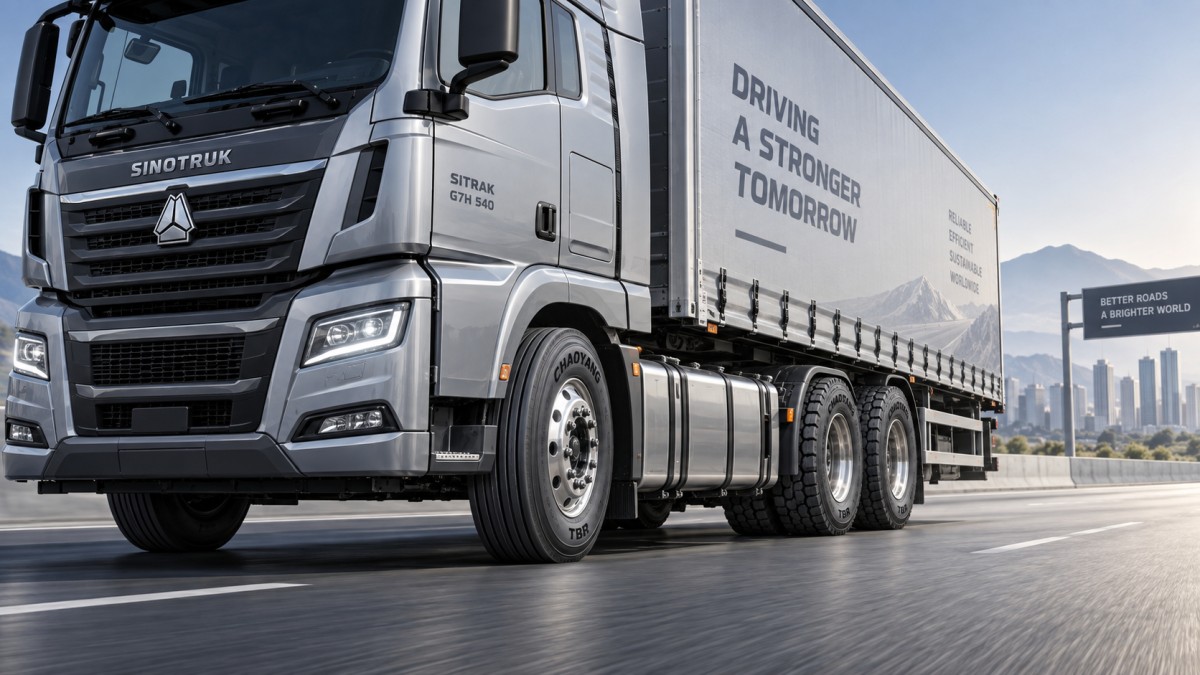
Tread design changes material use, but not in a simple way
Drive tires commonly use a deeper, more open lug pattern than steer tires. More tread depth and a larger tread volume can increase rubber consumption. Block edges, tie bars, stone ejectors, and reinforced shoulder areas may also add design and production complexity. For vehicles operating on wet, loose, or mixed surfaces, the traction benefit can justify this additional material.
However, a more open tread has a higher void ratio. In some designs, the space between lugs offsets part of the extra depth. A steer rib tire can also be expensive when it uses a wide, dense tread cap, multiple grooves, premium rolling-resistance compounds, or a sophisticated shoulder geometry intended to resist irregular wear. The visual aggressiveness of a drive tire is therefore not a reliable proxy for its manufacturing cost or service value.
The meaningful comparison is tread mass and usable tread depth within the same tire size, together with the intended operating route. A regional-haul drive tire designed for high-mileage pavement service may have a less aggressive tread than a mixed-service drive tire, while still commanding a higher price because its compound and casing package are engineered for lower heat generation and longer removal mileage.
Compound formulation can move the price more than tread depth
The tread cap is not a generic rubber layer. Steer and drive positions may require different balances of abrasion resistance, hysteresis, wet grip, cut resistance, and heat control. Rubber formulations that improve one attribute can compromise another, so tire makers tune compounds around the axle’s expected role.
A steer-position compound may prioritize low rolling resistance and resistance to uneven wear. If the tire is intended for long-distance highway operation, heat buildup and fuel-related rolling losses become important design constraints. A drive-position compound may need greater resistance to torque abrasion and tread block movement. For mixed service, it may also require improved resistance to cuts, chipping, and chunking.
These formulations can use different polymer blends, reinforcing fillers, resins, and protective ingredients. The exact recipe is proprietary, but the evaluation point is clear: two tires with identical visible dimensions can have substantially different compound costs and performance limits. A low initial price may indicate a simpler compound, but it cannot be judged from appearance alone. The manufacturer’s position designation, intended service classification, tread-depth specification, and warranty or casing policy provide more useful evidence.
Carcass and belt construction affect both purchase price and retread value
For commercial TBR applications, the casing is often as important as the original tread. A tire designed for retreading requires a durable carcass, stable bead area, consistent belt placement, and adequate resistance to heat and fatigue. These attributes affect the original TBR tire price because reinforcement materials and process control have a direct cost.
Steer tires can require particularly stable belt packages to maintain footprint consistency and reduce irregular wear. Drive tires may use reinforcement strategies aimed at resisting high torque, tread movement, and penetration in more demanding routes. Neither position has a universally heavier or more expensive casing. The design choice depends on whether the tire is built for line-haul, regional distribution, construction access, refuse, mixed service, or another duty cycle.
Technical evaluation should separate original tread life from casing life. A tire with a higher purchase price may be justified if its casing remains suitable for retreading after the first tread is removed. Conversely, a low-cost tire that reaches legal removal depth but cannot produce a reliable retread can be more expensive over its full service life. This is especially relevant when fleets operate a controlled casing-return program.
Load and inflation specifications must be compared position by position
Some price comparisons become misleading because the tires being quoted do not actually have the same load capability. The same nominal size may be available with different load indexes, ply ratings, pressure capacities, or service descriptions. A tire approved for a higher axle load or higher inflation pressure may use a stronger carcass, bead assembly, or belt structure, increasing its cost.
Steer axles can carry substantial loads, particularly on vehicles with forward-mounted equipment, specialized bodies, or changing load distribution. Drive axles may carry higher total axle loads and also experience torque. The tire must be selected against the actual axle loading, not merely the vehicle’s gross rating or the size fitted previously.
Inflation is part of this calculation. Underinflation raises deflection and heat generation, while overinflation can reduce contact patch conformity and accelerate center wear. A tire that appears expensive because of its higher-rated construction may be the correct choice if the operating pressure and axle load demand it. Fitting a lower-cost alternative outside its rated envelope creates a safety and durability risk rather than a saving.
Service environment often explains the widest price gap
The steer-versus-drive distinction alone does not determine price. The route and surface condition may be more influential. A highway steer tire and a construction-site drive tire are designed for such different hazards that their prices cannot be meaningfully interpreted as an axle-position premium.
- Long-haul highway service: steer tires tend to emphasize rolling resistance, directional stability, and uniform wear; drive tires balance traction with fuel efficiency and long tread life.
- Regional distribution: repeated turning, braking, urban surfaces, and curb exposure can make scrub resistance and shoulder durability important on the steer axle.
- Mixed service: drive tires may require deeper lugs, chip-resistant compounds, stone-ejection features, and stronger protection against casing damage.
- Severe winter operation: a traction-oriented drive tire may have additional siping and compound requirements. Its winter capability should be verified through the applicable marking and manufacturer documentation rather than inferred from an aggressive tread pattern.
A lower-priced highway drive tire should not be expected to survive the same conditions as a mixed-service drive tire. Likewise, an aggressive drive tire can create unnecessary rolling resistance, noise, or pavement wear if used exclusively on high-speed paved routes. The correct price benchmark is the tire’s intended service category, not only the axle label.
Uniformity and wear control can make steer tires unexpectedly costly
Steer tires are highly visible in vehicle behavior. Pull, vibration, irregular wear, and poor tracking are often noticed first at the steering axle. As a result, production consistency, radial force variation control, balance characteristics, and tread profile accuracy can carry greater importance for premium steer products.
A steer tire may also have a carefully shaped shoulder and groove arrangement to manage river wear, shoulder step wear, and rib tearing. Those features may not look as substantial as drive lugs, but they can require precise mold design and compound placement. If a steer tire is priced above a drive tire in the same size family, the difference may reflect these uniformity and wear-management requirements rather than an unusual commercial markup.
Price should therefore be evaluated against expected removal reason. A drive tire is often removed because traction has declined or tread has worn to its operating limit. A steer tire may be removed early because of irregular wear caused by alignment, suspension condition, wheel-end issues, or application mismatch. Paying more for a steer tire cannot compensate for mechanical faults, but a tire with a stable footprint and appropriate shoulder design can provide a better margin against normal operating variation.
A comparison method that avoids false equivalence
When evaluating quotes, place steer and drive tires into separate technical groups before comparing prices. Within each group, verify nominal size, load index, speed symbol where applicable, tread depth, intended service, casing policy, and applicable regulatory markings. Then examine whether the tire is designed for new fitment only, regrooving, retreading, or a defined casing-management program.
It is useful to request a specification sheet rather than relying on catalog photography. The technical sheet should clarify the recommended rim, overall diameter, section width, loaded radius where available, maximum load at stated pressure, tread depth, and position recommendation. For drive tires, assess lug geometry, stone-retention risk, and expected surface mix. For steer tires, examine rib arrangement, shoulder treatment, groove configuration, and suitability for the vehicle’s steering-axle load.
The resulting decision is not “buy the cheaper steer or drive tire.” It is whether each tire’s construction matches the forces, route, maintenance condition, and casing strategy of its assigned position. That is why TBR tire price can vary substantially between steer and drive designs even when the sidewall size marking appears identical: the tires are solving different engineering problems, and the cost should be judged against the specific failure risks they are built to control.
Chat Online