


What Is the MOQ for Wholesale Tires?
Minimum order quantity (MOQ) for wholesale tires is not a single industry-wide number. It is a commercial and production threshold set around a specific combination of tire type, size, pattern, construction, certification, packaging, and destination. A buyer may be able to order a small mixed trial shipment from available stock, while the same supplier may require a much larger quantity for a newly requested size, private-label sidewall, or container-bound export order.
The practical answer is therefore: the MOQ is often lowest for standard, regularly produced tire specifications and highest for customized or infrequently produced combinations. The relevant question is not simply “What is your MOQ?” but “What MOQ applies to this exact specification, under this delivery model, with these commercial requirements?”
Why tire MOQ is more complex than a unit count
Tires are manufactured through processes that are sensitive to production planning. A factory does not only need to make a certain number of tires; it needs to allocate molds, materials, curing capacity, inspection resources, labeling, and packing arrangements to a particular specification. Changing from one size or pattern to another can involve a production changeover, even when the two products belong to the same broad category.
For this reason, a supplier may quote MOQ in several different ways:
- minimum quantity per tire size;
- minimum quantity per tread pattern or mold;
- minimum quantity per stock keeping unit (SKU);
- minimum order value rather than a fixed tire count;
- minimum quantity per container;
- minimum quantity for private branding, special markings, or customized packaging.
These terms are not interchangeable. A request for “one container” does not automatically meet the MOQ for each size inside that container. A container may be physically full but still contain too few units of a specific low-volume size to justify a separate production run. Conversely, a buyer may meet a factory’s per-size MOQ but still need a larger total order to make freight economical.
Typical MOQ structures in wholesale tire trade
There is no reliable universal figure for tire MOQ because tire dimensions and freight configurations differ substantially. Passenger-car radial tires, light-truck tires, truck and bus radial tires, agricultural tires, off-the-road tires, and specialty products have different unit volumes, mold costs, production cycles, and loading quantities.
In practice, wholesale discussions commonly fall into four structures.
Stock-based orders
Where tires are already in finished-goods inventory, the MOQ may be relatively flexible. The supplier’s main concern is whether the order can be released, packed, documented, and transported efficiently. This is often the most workable route for a buyer testing a new supplier, filling gaps in an existing assortment, or combining sizes needed for immediate replacement demand.
Stock availability should still be confirmed by production date, not only by quantity. Tire age at shipment affects warehouse management, local selling plans, and buyer acceptance. A low MOQ is less valuable if the stock has an age profile that does not fit the intended distribution cycle.
Regular-production specifications
For commonly manufactured sizes and patterns, the MOQ is often linked to the factory’s normal production batch. The minimum may apply per specification or may allow selected sizes from the same production family to be combined. The key issue is whether the requested tires can be scheduled alongside other planned output without creating an inefficient short run.
This is where buyers should ask whether the MOQ applies separately to each load index, speed symbol, ply rating, sidewall marking, and certification version. A tire that appears identical in dimensions may be a different production item when its construction or compliance marking changes.
Container-based orders
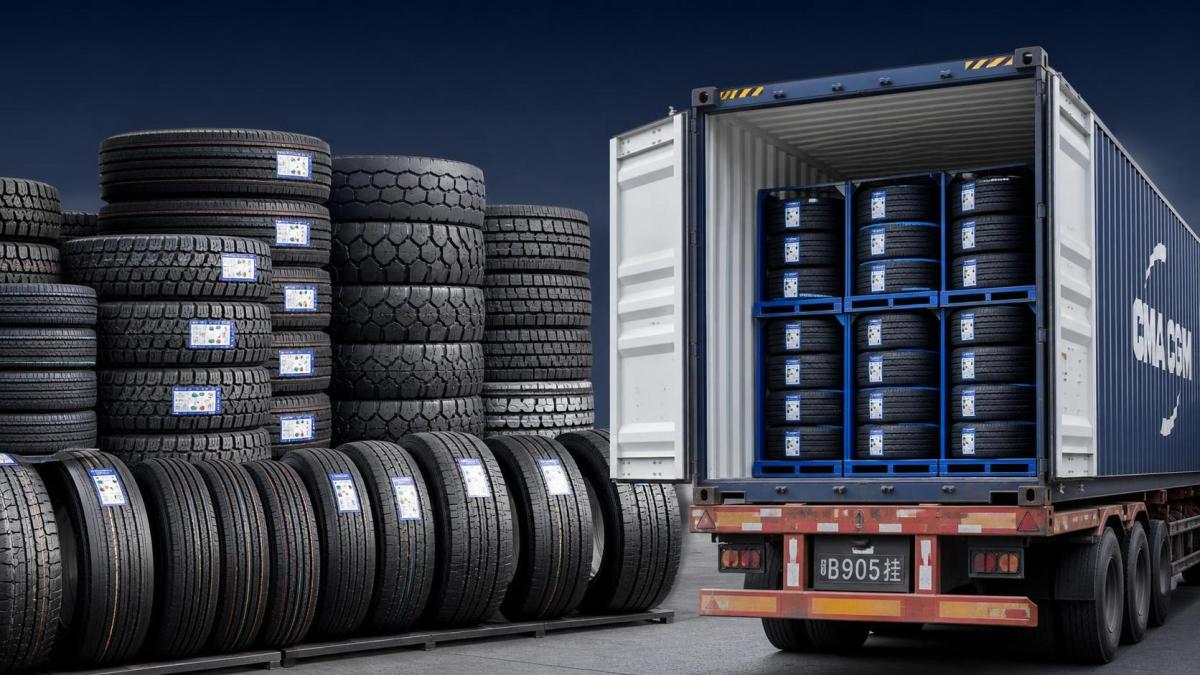
For export transactions, suppliers may set a full-container MOQ because ocean freight, loading labor, customs documentation, and cargo handling are more efficient at that level. This is a logistics threshold, not necessarily a manufacturing threshold.
A full container can also reduce per-tire freight cost, but it does not automatically reduce total landed-cost risk. A buyer that fills a container with slow-moving sizes may save on freight while tying up capital in inventory that turns slowly. Container optimization should therefore follow a demand plan, not replace one.
Customized production orders
MOQ is usually more demanding when the buyer requests a private brand, special sidewall lettering, custom labels, non-standard packaging, dedicated molds, a unique compound, or a market-specific certification configuration. The factory must recover the cost and operational disruption associated with the custom requirement.
The most important distinction is whether customization uses an existing mold and standard carcass or requires a new mold, altered construction, or separate compliance work. The first may be commercially manageable at a moderate volume; the second can require a substantially larger commitment and a longer lead time.
The variables that change MOQ most often
Tire category and physical size. Larger tires occupy more warehouse and container space, so a shipment MOQ expressed in units can be lower even when the commercial value is high. Smaller passenger tires may require many more units to fill the same freight volume. Heavy truck and specialty tires also involve different production economics from mass-market passenger sizes.
Demand frequency of the specification. A size that is routinely produced and supplied into several markets is easier to place in a production schedule than an uncommon fitment. However, buyers should not assume that a familiar nominal size is a standard item. A particular combination of size, load rating, speed rating, tread design, and regional marking can still be niche.
Pattern and intended service. Highway, regional, mixed-service, traction, steering, all-position, winter, and special-purpose designs are not merely marketing categories. Their tread geometry, compound priorities, and operating conditions differ. Mixing patterns in one order can be appropriate, but each pattern may have its own MOQ.
Regulatory and market-entry requirements. The tire must carry the markings and approvals required by the destination market. Requirements may involve safety, labeling, chemical restrictions, noise, or other local rules depending on the market and tire category. A quotation should identify exactly which compliance version is offered. A low MOQ has little value if the tire cannot legally enter or be sold in the intended market.
Branding and documentation. Private-label programs can introduce MOQ requirements for printed materials, labels, packing, artwork approval, and sidewall configuration. The buyer should establish whether the stated MOQ is for the first order only, per production run, or cumulative across an agreed period.
Shipping destination and Incoterms. Freight conditions affect the feasible order size. Under FOB terms, a buyer may choose the forwarder and consolidate cargo, potentially allowing more flexibility. Under CIF or delivered arrangements, the supplier’s logistics solution may impose its own minimum shipment value or container preference. This does not make either arrangement better by itself; it changes which party controls consolidation and freight risk.
A quote can look flexible while remaining operationally restrictive
MOQ discussions often fail because the buyer receives a simple answer—such as “mixed sizes accepted”—without knowing the conditions behind it. Mixed loading can mean several very different things:
- any sizes from available stock can be combined;
- only sizes within one product category can be combined;
- each size must still meet a minimum quantity;
- the order can be mixed, but only for a full container;
- the first order must meet one threshold and repeat orders another;
- mixed loading is permitted, but private-label packaging cannot be mixed at low volume.
A usable quotation should state the basis of the MOQ in writing. It should also distinguish between finished stock and future production. These two supply routes have different implications for delivery time, date code, permitted mix, payment terms, and the possibility of changes after order confirmation.
Another frequent issue is the difference between a factory MOQ and a trader’s MOQ. A trading company may offer a lower order threshold by consolidating demand from several buyers or drawing from warehouse stock. That can be useful, especially for market testing. But the buyer should understand whether the product source, manufacturing date, warranty responsibility, technical documentation, and claim process remain consistent across lots.
How to assess MOQ against inventory risk
The best MOQ is not the smallest quantity available. It is the smallest quantity that supports a viable landed cost without creating avoidable stock exposure. This is particularly important in tires because the assortment can expand quickly: a distributor may need multiple rim diameters, aspect ratios, load indices, axle positions, seasonal patterns, and service categories.
Before accepting an MOQ, match each line item to a realistic replenishment cycle. Fast-moving fitments may justify container-level purchasing. Less predictable sizes are better handled through stock programs, consolidated orders, or delayed commitment until there is confirmed demand. The decision should also account for warehouse conditions, stock rotation discipline, local competition, and the time required to establish a new brand or pattern in the market.
For fleet-related purchases, the calculation should start with vehicle population and operating duty rather than only purchase price. A fleet running regional delivery vehicles, for example, may prioritize dimensions, load index, tread wear behavior, heat management, retread policy, and replacement intervals. Ordering an attractive low-volume pattern solely because it lowers the initial unit price can create a replacement problem later if the same specification cannot be replenished promptly.
Technical fitment should be locked before quantity negotiations. Consider a medium-duty radial tire such as HD285, available in 8.5R17.5 126/124 L and 225/80R17.5 129/127 L configurations. These are distinct commercial items, not interchangeable units for MOQ purposes. Their dimensional and load requirements must correspond to the vehicle, wheel, axle application, and applicable operating limits. Even a pattern designed for varied road conditions—with longitudinal grooves, transverse grooves, variable pitch, and heat-dissipation features—should not be selected simply because it can be grouped into a convenient order quantity.
Questions that should be settled before issuing a purchase order
A disciplined MOQ inquiry is specific enough for the supplier to give a meaningful answer. The request should identify the tire size, desired pattern, load and speed ratings, quantity by SKU, destination, Incoterm, branding requirement, and whether the buyer accepts available stock or requires new production.
It is also important to confirm the following commercial details:
- Does the MOQ apply per size, pattern, tire category, or total order?
- Can quantities be mixed across sizes, and what is the minimum for each line?
- Is the quoted product from stock or a future production batch?
- What production-date range will be supplied?
- What marks, certificates, labels, and test documentation are included for the destination?
- Does private branding change the MOQ, price, lead time, or deposit requirement?
- How many tires fit in the intended container type after accounting for the actual size mix?
- What is the policy for shortage, transit damage, manufacturing claims, and replacement documentation?
The container-loading question deserves more attention than it receives. Tire loading is influenced by tire dimensions, packing method, nesting arrangement, whether pallets are used, and any restrictions imposed by the buyer or destination. An estimate based on one size may be inaccurate for a mixed order. Buyers should request a loading plan based on the exact SKU mix before assuming a container will be full.
MOQ negotiation should focus on repeatability, not only the first shipment
A supplier may accept a lower MOQ for an initial order when stock is available, but that flexibility may not be repeatable. If a distribution program depends on regular replenishment, the buyer needs to know what will happen after the trial order. Can the same mix be supplied again? Will the original price remain valid? Is the pattern scheduled regularly? Can the supplier reserve capacity or hold stock? These questions are more valuable than a one-time concession that cannot be reproduced.
There are legitimate ways to reduce MOQ pressure without asking a factory to run uneconomic batches. Buyers can consolidate compatible sizes, select existing patterns rather than custom designs, use standard packaging, align forecasts with production cycles, or place a rolling call-off plan where commercial terms permit. Each approach trades some flexibility for better production and logistics efficiency.
MOQ should ultimately be treated as a supply-chain condition rather than a bargaining obstacle. A credible number reflects production practicality, freight economics, compliance configuration, and the supplier’s ability to deliver the same product again. The right wholesale tire order is one in which specification, quantity, documentation, production date, and replenishment plan all support the intended market—not merely one that reaches the lowest possible opening quantity.
Chat Online