


PCR Tire Wholesale Buying Guide
PCR Tire Wholesale Buying Guide: What Matters Beyond the Unit Price
PCR tire wholesale purchasing requires more than comparing prices. For distributors, importers, and businesses serving vehicle fleets, the real decision is whether a tire program can protect margins after it reaches the market. A low quotation may look attractive until inconsistent dimensions, uneven shipment timing, limited size availability, or avoidable warranty discussions begin to consume time and working capital.
Passenger car radial (PCR) tires are generally semi-steel radial tires designed for passenger vehicles and many crossover or light-duty applications, depending on the specification. They are a high-volume category, but not a simple one. Local climate, road surfaces, vehicle mix, speed expectations, labeling rules, and seasonal demand all affect what will actually sell. The best wholesale choice is rarely the tire with the most aggressive price; it is the one whose performance, specification range, supply reliability, and landed cost fit the buyer’s market.
Start With the Market, Not the Catalog
Before requesting a quotation, define the intended market in practical terms. Is demand centered on compact city cars, sedans, SUVs, taxis, rental vehicles, or independent replacement shops? A tire range built around popular rim diameters may move quickly in one market and remain slow stock in another. The same applies to aspect ratios, load indexes, and speed ratings.
Weather deserves the same attention. In regions with frequent rain, buyers usually need to assess wet-road behavior, drainage design, and handling consistency rather than selecting a pattern solely because it appears aggressive. In hotter regions or on rougher pavement, heat management and resistance to demanding daily use may receive more weight. Where seasonal regulations or winter conditions apply, the technical and legal requirements must be verified against the destination market rather than assumed from a supplier’s general product range.
A useful starting brief should identify the target sizes, expected sales mix, intended vehicle applications, destination port or warehouse, required documentation, and preferred shipment rhythm. This makes supplier comparisons more meaningful because every factory is responding to the same commercial need.
Read a PCR Specification as a Commercial Decision
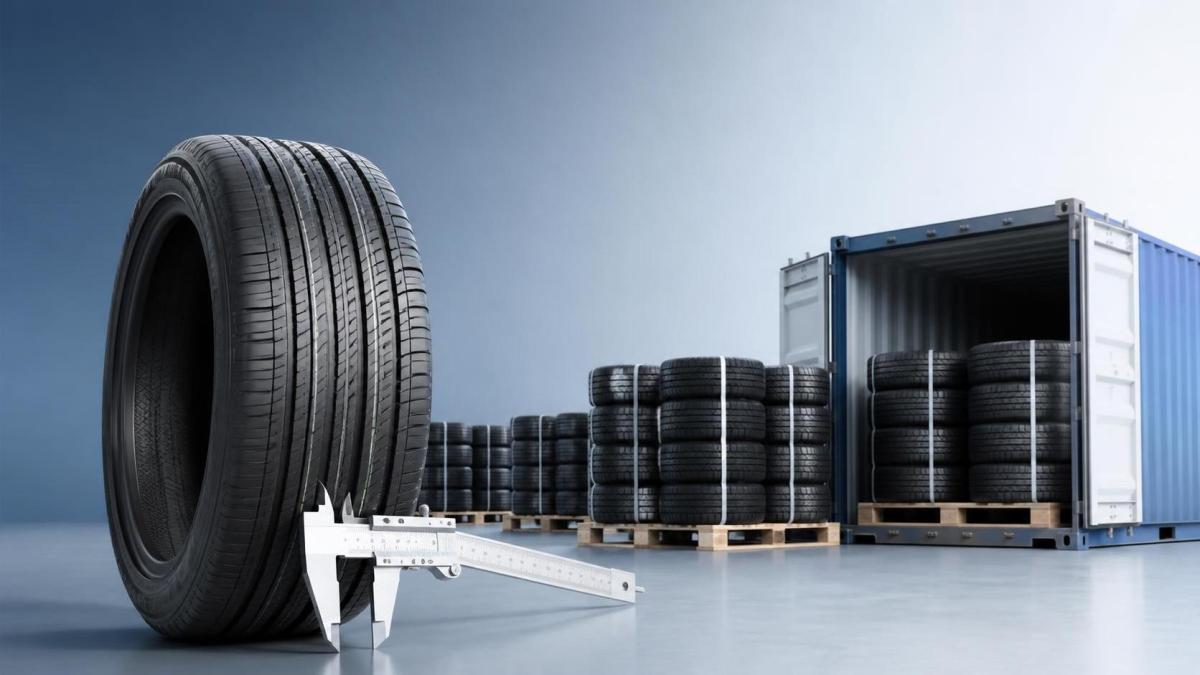
Wholesale buyers should not treat a tire size as the complete specification. A marking such as 205/55R16 indicates nominal width, aspect ratio, radial construction, and rim diameter, but it does not by itself confirm whether the tire suits a particular vehicle or operating profile. Load index and speed rating need to align with the vehicle application and local requirements. Standard rim information, section width, overall diameter, and tread depth also help buyers check fitment consistency and compare alternatives properly.
For a distributor, the practical question is not simply “Does this size exist?” It is “Can this size be supplied consistently with the same intended positioning?” If a range changes frequently in construction details, visual identity, or available ratings, it becomes harder to manage listings, train sales staff, and handle repeat orders. Confirm the exact specification sheet for each key size, especially when placing a first container order or adding a new pattern.
Quality Evaluation Should Go Beyond a Sample’s Appearance
A physical sample remains useful, but it is only one part of due diligence. Buyers should ask how the manufacturer controls consistency across production batches, how technical specifications are managed, and what information is available if a quality concern arises after delivery. Clear communication around production dates, labeling, packing, and inspection procedures often reveals more about a supplier’s operating discipline than a polished brochure does.
It is also worth separating product claims from application evidence. Terms such as “quiet,” “fuel-saving,” or “all-weather” can mean different things across markets. Ask what measurable specification, design feature, test record, or approved documentation supports a claim where such evidence is relevant. If the destination country requires a particular marking, approval, or labeling format, confirm it before production—not after the container is booked.
For private-label programs, consistency includes more than rubber and construction. Sidewall branding, mold availability, packaging, barcode details, and shipping marks should be agreed in writing. A wholesale buyer can tolerate normal planning adjustments more easily than a shipment that arrives with an unexpected brand presentation or mixed packing configuration.
Supply Capability Is Part of Tire Quality
A PCR tire wholesale program succeeds when replenishment is predictable. Demand can shift suddenly toward certain sizes, while slow-moving inventory ties up funds and warehouse space. That makes production planning, size availability, order consolidation, and export coordination as important as the initial quotation. Buyers should discuss realistic lead times, minimum order expectations, loading plans, and whether the supplier can support repeat ordering across a wider portfolio.
Jinan Xinkunyu International Trading Co., Ltd., founded in 2001 and formerly known as Jinan Kunyu, operates on a 360,000-square-meter site with more than 1,000 employees, including 180 engineering and technical personnel. Its production scope includes high-performance semi-steel radial tires, truck tires, and special tires. That broader manufacturing base can matter to buyers whose distribution businesses serve both passenger-car replacement demand and commercial-vehicle channels, provided each product category is evaluated against its own application requirements.
For example, a distributor handling mixed vehicle segments may also review commercial radial options such as HD989. Its listed sizes include 7.00R16LT through 295/80R22.5, which are not PCR sizes; they belong in a separate truck or light-truck sourcing discussion. The relevant point is portfolio planning: do not use one tire category’s specification logic to approve another. Commercial applications require their own review of wheel position, load, heat dissipation, and road conditions.
Logistics Can Change the Real Cost Per Tire
Freight, container utilization, customs procedures, local handling, and inventory timing can alter the economics of an otherwise competitive offer. Buyers should compare quotations on a consistent basis and calculate landed cost rather than focusing only on ex-factory or FOB pricing. A slightly higher unit cost may be commercially preferable if it reduces partial shipments, avoids urgent replenishment, or improves container loading efficiency.
Dedicated logistics lines are particularly relevant when a buyer needs stable routes and clear coordination. Jinan Xinkunyu has established logistics lines supporting delivery throughout China and to most countries and regions in Europe and Asia. Even so, delivery planning should remain specific: confirm the shipment terms, destination, documentation responsibilities, loading date, and any local import requirements for each order. “International delivery capability” is useful only when translated into an executable shipment plan.
Avoid the Most Expensive Wholesale Mistakes
The most costly purchasing errors are usually avoidable. Ordering too many low-turning sizes, approving incomplete specifications, assuming a sample represents every future batch, or overlooking destination-market requirements can create problems that no discount will solve. Another common mistake is placing an initial order without agreeing how technical questions, shortages, damage claims, or quality feedback will be documented and handled.
A sound first order is often focused rather than oversized. Start with the sizes and performance positioning that match actual local demand, review documentation carefully, and establish a repeat-order process before expanding the range. This approach gives the buyer a clearer view of supply consistency without turning every new pattern into a large inventory commitment.
The strongest PCR tire sourcing decisions connect four details: correct fitment, credible performance for the road conditions, repeatable manufacturing, and delivery that supports the buyer’s inventory plan. When those points are confirmed before purchase, wholesale tire buying becomes less about chasing the lowest number on a quotation and more about building a range that customers can reorder with confidence.
Chat Online