


PCR Tire Sizes: Complete Size Guide
A tire sidewall can look like a string of numbers until a replacement is needed, a vehicle pulls slightly after fitting new tires, or a buyer discovers that the tire offered is the right rim diameter but not the right load or speed specification. For passenger cars, choosing the correct PCR tire size is not just about making the tire fit the wheel. It affects steering response, ride height, braking behavior, speedometer accuracy, fuel use, and clearance around the suspension.
The quickest rule is simple: use the vehicle manufacturer’s approved size, load index, and speed rating whenever possible. A PCR tire size such as 205/55R16 91V tells you the tire’s section width, aspect ratio, radial construction, rim diameter, load capacity, and speed capability. Changing one part of that code can change the tire’s overall diameter or operating limits, even when the tire still mounts on the same wheel.
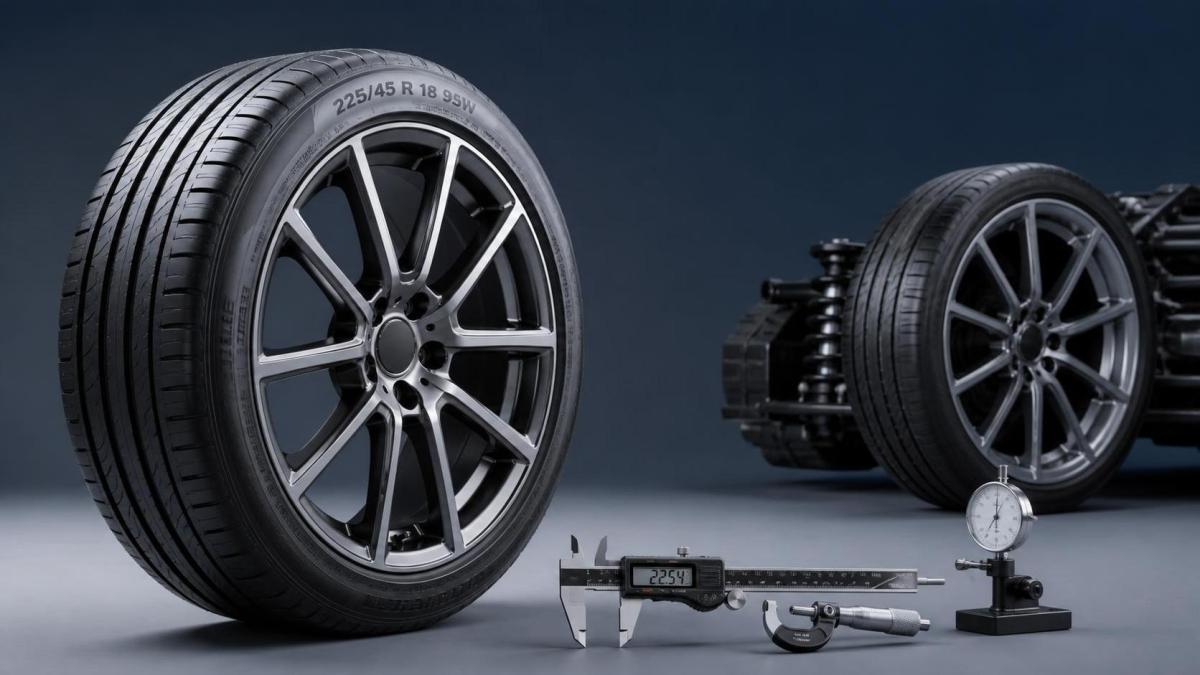
Reading the standard PCR tire size code
PCR stands for passenger car radial tire. Most modern passenger vehicles use radial construction, identified by the letter R in the size marking. Consider the example 205/55R16 91V:
The first three numbers are often misunderstood. A 205/55 tire does not have a 55 mm sidewall. Its approximate sidewall height is 205 × 0.55, or about 113 mm. That height appears twice in the tire’s total diameter, above and below the wheel. This is why a modest change in aspect ratio can noticeably alter vehicle height and speedometer readings.
Why the same rim size does not guarantee interchangeability
A 205/55R16 and a 225/50R16 both fit 16-inch wheels, but they are not automatically interchangeable. The second tire is wider and has a lower-profile sidewall. Its overall diameter may be close enough for some approved fitments, yet it can still require a different wheel width or create clearance issues at full steering lock or suspension compression.
When comparing PCR tire sizes, calculate or verify the outside diameter rather than judging by width alone. A simplified formula is:
Overall diameter = rim diameter in millimeters + 2 × (section width × aspect ratio)
Since one inch equals 25.4 mm, a 16-inch rim contributes 406.4 mm to the total. For 205/55R16, the estimated diameter is 406.4 + 2 × 112.75, or about 632 mm. Actual manufactured dimensions can vary slightly by tire design, approved rim width, inflation pressure, and measuring method, so catalog dimensions should be treated as the final reference.
What to check before moving to a different size
Drivers sometimes consider wider tires for appearance or dry-road steering feel, while buyers may need an available alternative when the original size is temporarily unavailable. Before approving a substitute, check more than the diameter.
- Wheel width: Every tire size has an approved rim-width range. A tire mounted on a wheel that is too narrow or too wide can distort the tread profile and affect handling.
- Vehicle clearance: Check clearance to liners, struts, brake components, and suspension parts, particularly with the steering turned fully left and right.
- Load index: The replacement should meet or exceed the vehicle’s required load capacity. Do not select a lower load index simply because the physical size appears similar.
- Speed rating: Match the manufacturer requirement and local operating conditions. A higher rating does not cancel the need to observe legal speed limits or tire-condition limits.
- Axle consistency: Tires on the same axle should normally have matching size, construction, tread pattern family, and similar tread depth. Uneven rolling circumference can be especially problematic on all-wheel-drive vehicles.
- Spare tire compatibility: A temporary spare follows separate instructions. It should not be treated as a normal replacement size.
Common PCR tire size changes and their trade-offs
Moving to a wider tire
A wider tire may provide a broader nominal tread footprint, but the result depends on vehicle weight, alignment, compound, inflation pressure, and road surface. It can also increase steering effort, road noise, and the chance of water displacement problems in heavy rain if the tread design is not suited to the conditions. Width changes should never be made without confirming rim compatibility and fender clearance.
Using a lower-profile tire
A lower aspect ratio reduces sidewall height. This often produces quicker steering response because there is less sidewall flex, but it also leaves less cushioning over potholes and sharp road edges. On rough urban roads, the practical risk is not only a firmer ride; wheel damage and sidewall impact damage become more likely when pressure is too low.
Changing overall diameter
A larger outside diameter raises the vehicle slightly and can make the speedometer display a lower speed than the actual road speed. A smaller diameter has the opposite effect. Diameter changes may also affect gearing behavior, electronic driver-assistance calibration, and the fit of snow chains where those are permitted. For this reason, an alternative size should be confirmed against the vehicle’s approved fitment information rather than selected by visual similarity.
Load index, speed rating, and pressure are part of the size decision
The size code alone does not define whether a tire is suitable. Two tires marked 215/60R16 can have different load and speed markings. For example, an extra-load version may have a reinforced construction and a different inflation requirement from a standard-load version. The vehicle placard, usually located around the driver’s door opening or fuel-filler area, identifies the intended cold inflation pressure for the fitted size and axle load.
Pressure should be checked when tires are cold, not immediately after highway driving. Underinflation can cause excess heat, shoulder wear, sluggish response, and increased fuel consumption. Overinflation can reduce ride compliance and concentrate wear near the center of the tread. Do not use the maximum pressure printed on the sidewall as the routine target unless the vehicle manufacturer specifically requires it; that figure is associated with the tire’s maximum-load condition.
A practical replacement workflow
- Read the complete marking on the existing tire, including load index and speed rating.
- Confirm the approved original and optional sizes on the vehicle placard or owner documentation.
- Match the rim diameter exactly and verify the wheel-width range for the proposed tire.
- Compare estimated overall diameter and investigate any meaningful difference before installation.
- Confirm that load index and speed rating satisfy the vehicle requirement.
- After fitting, inspect clearance, set cold pressure to the vehicle specification, and reset any tire-pressure monitoring procedure required by the vehicle.
This process also prevents a frequent purchasing mistake: mixing passenger-car sizes with off-road or recreational tire formats. A marking such as 27x9-14 is expressed in overall diameter, section width, and rim diameter, and it is not a PCR size equivalent. For example, the ATV-oriented SL501 is available in 27x9-14, 27x11-14, and 30x12-14 specifications with 6PR construction. Those specifications are intended for ATV applications and should be selected by the vehicle’s required rim, load, and operating conditions, not substituted onto a passenger vehicle because the rim diameter happens to match.
When an apparently correct tire still causes problems
Size-related issues are not always obvious at installation. A tire may clear the bodywork while parked but touch a liner when the suspension compresses. A vehicle can also feel unstable after a size change because the rear and front axle tires have different constructions, pressures, or rolling diameters. If vibration begins immediately after fitment, first check mounting direction, balancing, wheel condition, centering, and correct inflation. If rubbing, warning lights, or unusual steering behavior appear, stop treating the issue as cosmetic and verify fitment before continuing to drive.
The most reliable PCR tire choice is usually the exact approved specification, selected with the correct load index, speed rating, rim-width compatibility, and cold pressure. Alternative sizes can work only when they remain within the vehicle’s approved fitment limits and do not compromise clearance, axle matching, or operating capacity.
Chat Online