


PCR Tire Load Index and Speed Rating Guide
A tire sidewall can look like a string of numbers and letters until a replacement decision has to be made quickly. A driver may be comparing two passenger car radial tires with the same rim diameter, while a fleet buyer may be checking whether a higher ply tire is automatically a safer substitute. In both cases, the key point is simple: the load index states how much weight a tire can carry at its specified conditions, and the speed rating identifies the maximum speed category the tire is designed to sustain under controlled conditions.
For PCR tire selection, neither marking should be treated as a decoration or a performance claim in isolation. The replacement tire must meet the vehicle manufacturer’s required load capacity and should normally meet or exceed the original speed rating, unless the vehicle documentation permits another fitment. A tire that physically fits the wheel can still be unsuitable if its load index, inflation capability, or speed rating does not match the vehicle’s operating demands.
Reading the markings on a PCR tire
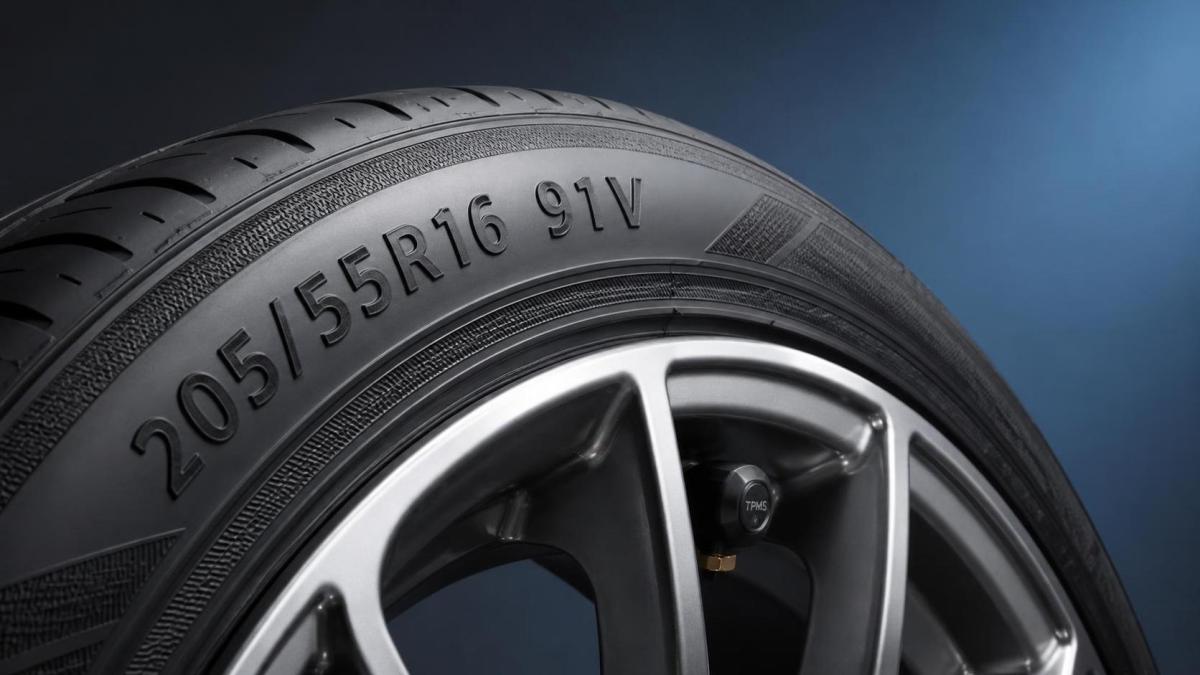
A common passenger tire marking might read 205/55R16 91V. The size section describes the tire’s dimensions and construction; the final two characters are the service description:
- 91 is the load index. It corresponds to a defined maximum load per tire in an industry load-and-inflation table.
- V is the speed rating. It represents a maximum speed category, commonly associated with passenger-car use.
The number is not a direct kilogram or pound value. A load index of 91 does not mean 91 kilograms; it must be checked against the relevant conversion chart. The rating also applies only when the tire is correctly mounted, inflated, and operated within its approved conditions. Underinflation, overloading, impact damage, excessive heat, or poor alignment can reduce the practical margin long before a sidewall marking becomes relevant.
Speed letters work the same way: they are category codes rather than everyday recommended cruising speeds. A V-rated tire is not an instruction to drive at the top speed associated with V. It indicates the tire has been tested for that speed category under prescribed conditions. Road laws, weather, tire condition, vehicle capability, and cargo load remain more important in real driving.
Why the vehicle’s axle loads matter more than the tire’s appearance
When selecting replacement passenger tires, start with the required axle load rather than the tire’s tread pattern or sidewall profile. The weight carried by the front and rear axles is often different, and it changes with passengers, luggage, towing load, and vehicle configuration. Each tire on an axle must have enough rated capacity for its share of the load, with the required safety margin specified by the vehicle manufacturer.
A frequent mistake is to divide the vehicle’s curb weight by four and use that as the selection result. Curb weight excludes many real operating conditions. It also ignores uneven loading, braking transfer, cornering forces, and the fact that a fully loaded vehicle may approach its tire limits differently from an empty one. The information on the vehicle placard, owner’s manual, and original-equipment tire specification should be the starting point.
Do not reduce the load index simply because the new tire has a wider tread or a stiffer-looking sidewall. Width, aspect ratio, and load capacity are related only through the tire’s approved design and its published service description. A wider tire can have a lower load index than a narrower tire in another construction.
Standard load, extra load, and pressure
Some PCR sizes are available in Standard Load and Extra Load, often marked XL or reinforced. An XL tire may support a higher load at a higher permitted inflation pressure than the standard-load version of the same nominal size. That does not mean every vehicle benefits from changing to XL construction. The wheel must be suitable, the recommended pressure must be followed, and ride comfort may differ because the sidewall structure can be firmer.
Inflation pressure is part of the load-capacity calculation, not an afterthought. Increasing pressure above the vehicle recommendation is not a universal way to “upgrade” a tire’s capacity. It may affect contact patch shape, handling, wear, and ride quality, while still not changing the legal or technical limits of the tire and wheel assembly. Use the vehicle placard pressure for the installed tire specification unless an approved alternative fitment provides different instructions.
Choosing a speed rating without oversimplifying it
The safest routine replacement choice is usually a tire with the same speed rating as the original equipment or a higher rating that is approved for the vehicle and available in the correct size and load index. Ratings such as T, H, V, W, and Y are often seen on passenger tires, but the letter alone does not describe wet grip, braking distance, tread life, winter performance, or ride comfort.
A higher speed rating can reflect differences in casing construction, heat resistance, tread compound, and handling response. It may also alter comfort, noise, wear characteristics, and price. That is why “higher is always better” is not a useful purchasing rule. The right choice is the tire service description and application type that match the vehicle’s intended use.
In a situation where a lower speed-rated tire is considered, verify the vehicle manufacturer’s guidance and any applicable local requirements first. Temporary or seasonal fitments can have specific conditions, including visible speed-limit labels in some markets. A lower rating should never be selected merely because the tire is less expensive or immediately available.
A practical replacement check before ordering
Before placing an order, read the complete sidewall description on the current tires and compare it with the vehicle placard. The following sequence prevents most specification errors:
- Confirm the tire size, including section width, aspect ratio, construction, and rim diameter.
- Identify the original load index and speed rating, such as 91V or 94W XL.
- Check whether the vehicle requires a specific load version, run-flat construction, directional pattern, or staggered front/rear fitment.
- Compare the replacement tire’s service description with the required minimum values.
- Verify that the wheel width and diameter are approved for the candidate tire size.
- Use the recommended cold inflation pressure after installation, then recheck pressure when the tires are cold.
It is also important to compare like with like. A passenger-car radial tire is not interchangeable with a light-truck or commercial truck tire simply because the load index appears higher. Tire categories use different constructions, operating conditions, wheel systems, and dual-fitment conventions. A commercial tire may show two load indices, such as 149/146, where the first applies to single fitment and the second to dual fitment. That format is not the same as a typical PCR service description.
When commercial tire ratings enter the conversation
Mixed fleets and workshop inventories sometimes create confusion because tire sizes, load ratings, and speed letters are discussed together across passenger and truck applications. For example, the HD183 is a TBR tire range rather than a PCR tire. Its available specifications include commercial service descriptions such as 10.00R20 149/146J and 12.00R20 158/155K, with ratings intended for truck tire applications.
Those figures illustrate why direct comparison can be misleading. A 149/146J marking describes a high-capacity commercial tire with separate single and dual load ratings, while a passenger tire marking such as 91V is evaluated in a different vehicle and operating context. The HD183 tread design uses widened side blocks to support shoulder rigidity and wear resistance, along with groove angles intended to reduce stone trapping. These are useful commercial-tire characteristics, but they do not make it a substitute for a passenger car radial tire.
For truck applications, confirm the axle position, single or dual configuration, standard rim, ply rating, inflation requirement, and vehicle speed profile. For passenger vehicles, stay focused on the placard specification, complete tire size, load index, speed rating, and any special fitment requirement. Keeping those two selection paths separate avoids a costly mismatch.
Signs that the rating decision needs another look
Recheck the specification when the vehicle is regularly driven fully loaded, fitted with aftermarket wheels, used for towing, or converted to a different tire size. A change in overall diameter can affect clearance, speedometer accuracy, gearing, and load requirements. Replacing only two tires also deserves care: the pair should match in size, construction, load index, and speed rating, and placement should follow the vehicle and tire manufacturer recommendations.
Finally, load index and speed rating cannot compensate for neglected maintenance. Inspect for cuts, bulges, irregular wear, exposed cords, and embedded damage. Maintain cold pressure, rotate tires where the fitment allows, and correct alignment or suspension issues that create shoulder wear. The sidewall service description tells you the tire’s designed operating envelope; proper installation and maintenance determine whether it can perform within that envelope.
Chat Online