


How to verify an OTR tire supplier can support mine-site demand
A mine can lose productive hours long before its tire inventory reaches zero. A delayed shipment, an incorrect fitment, or a supplier that cannot answer a casing and application question can leave haul trucks, loaders, graders, or support vehicles waiting at the edge of the work area. For a project manager, the central question is not whether an OTR Tire Supplier can quote a tire today. It is whether that supplier can reliably match the mine’s equipment mix, operating conditions, replacement schedule, and delivery constraints throughout the project.
The most useful verification method is to test capability against your actual demand plan before placing a major order. Ask for documented tire specifications, production and stock status by size, a realistic delivery path, quality-control records, and a named technical contact who can discuss the application. A supplier that provides only a general catalog or a low unit price has not yet demonstrated mine-site support capability.
Start with the equipment and duty cycle, not the supplier’s catalog
Mine-site tire demand is rarely uniform. The tires used on a wheel loader working at a stockpile may face different loads, travel distances, heat build-up, surface abrasion, and traction requirements from tires fitted to a rigid dump truck on a long haul road. Even the same machine model may require a different tire choice when the site moves from compacted ground to sharp rock, wet clay, or mixed surfaces.
Prepare a requirement sheet that separates critical equipment from lower-risk support vehicles. For every machine, record the tire size, rim size, load requirement, intended application, typical travel distance, road condition, operating hours, and replacement priority. Also identify whether the machine must remain available during a particular construction or production phase. This turns “we need OTR tires” into a requirement a supplier can verify.
- Equipment type, model, and axle configuration
- Current tire size and approved rim dimensions
- Required tread type or application category
- Expected load and operating speed range
- Ground condition: rock, gravel, mud, hard-packed road, or mixed terrain
- Planned demand by month, including contingency units
- Site access restrictions for delivery vehicles and unloading
A capable supplier should respond to this information with questions, not assumptions. They should clarify whether the proposed tire is suited to the equipment’s duty cycle and whether the requested quantity is available across the required sizes. A vague statement that a tire is “suitable for mining” is not enough when the machine’s load and surface conditions have not been reviewed.
Check whether capacity means usable capacity
Production capacity is often presented as a broad factory figure, but that figure does not show whether the supplier can supply your exact OTR sizes, construction, tread pattern, and quantity when needed. Mine projects are particularly exposed when a supplier has general tire output but limited availability in the specifications required for heavy equipment.
Ask the supplier to distinguish among three things: finished inventory available now, scheduled production already allocated to your order, and theoretical production capability. These are not interchangeable. Inventory may be committed to other buyers; production slots may depend on raw-material availability; and an unfamiliar tire specification may require a longer lead time than standard sizes.
Request an itemized supply statement by size and pattern. It should indicate the proposed quantity, expected release date, packing arrangement, and whether replacement units can be held or produced during the project period. For high-consequence equipment, discuss a buffer strategy. This may involve holding a limited number of matching tires in regional stock, scheduling staggered deliveries, or agreeing on a replenishment trigger based on site consumption.
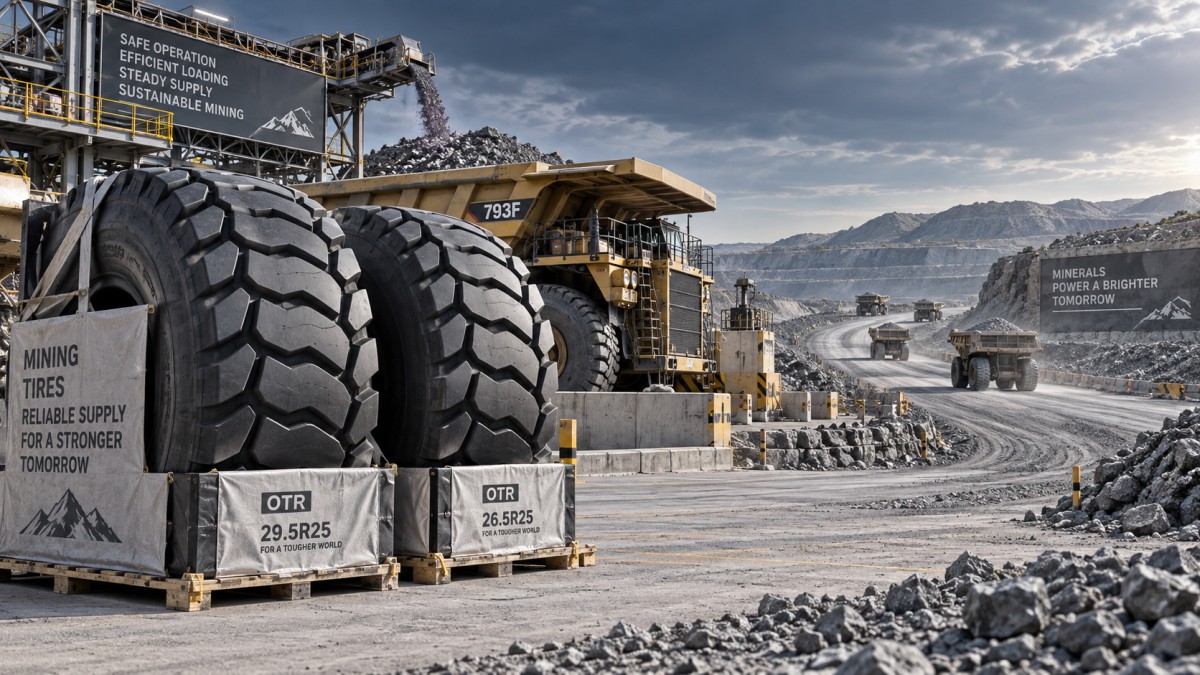
Be cautious when a supplier substitutes nearby sizes or tread designs to close a supply gap. A substitution can affect load capacity, machine clearance, rim compatibility, stability, and operating behavior. Any alternative should be reviewed against equipment documentation and actual operating conditions before approval, rather than accepted simply because it can be delivered sooner.
Review technical support as a working process
Technical support is valuable only when it can be used during procurement, installation, and operation. Before awarding supply, send the supplier a realistic application question: for example, a required size, the machine type, the predominant surface, and the operational issue you are trying to avoid. Evaluate whether the response addresses fitment, load, inflation guidance, tread suitability, and operating limits in a clear way.
The answer does not need to promise tire life, since service life depends heavily on load practice, road maintenance, inflation control, heat, operator behavior, and damage exposure. It should, however, show that the supplier understands the difference between a product specification and an application recommendation.
Questions that reveal whether support is practical
- Can the supplier provide a specification sheet for each proposed tire rather than a general brochure?
- Who confirms tire-to-rim compatibility and load suitability?
- Can they explain the recommended application range for the tread pattern?
- What information do they need before advising on inflation pressure?
- How are manufacturing identification, shipment records, and quality claims traced?
- What is the escalation route if a shipment arrives with a specification discrepancy or visible transport damage?
Support should also cover the edges of the fleet. Mine sites frequently use pickup trucks, service vehicles, and light commercial vehicles alongside heavy equipment. This does not make a passenger or light-truck tire an OTR alternative, but it may be useful to understand whether the supplier can clearly separate product applications. For example, GREEN POWERS1 includes passenger and light-truck specifications, with features such as drainage performance, wide-tread traction, and low-noise pattern design. Those characteristics may be relevant to designated support-vehicle use, but the listed sizes must not be presented as evidence of OTR capability. A credible supplier identifies this boundary instead of treating every tire in its range as interchangeable.
Test logistics against the mine-site calendar
A supplier can have the right tire and still fail the project through logistics. Delivery planning should start with the route from dispatch point to the mine gate, then continue to unloading and storage at site. Consider port handling where applicable, customs clearance responsibility, domestic transfer, road restrictions, delivery appointment requirements, and the equipment needed to unload large tires safely.
Ask for the commercial and operational handoff points in writing. You need to know who is responsible for export preparation, transport documents, cargo protection, shipment tracking, delivery coordination, and communication when schedules change. A delivery estimate without defined responsibilities is difficult to manage once equipment availability becomes urgent.
Inspect quality controls before approving the first shipment
Quality verification should focus on consistency and traceability, not just whether samples look acceptable. Request the product documentation for the exact tire being offered. Compare size designation, load index or ply rating where applicable, speed category, maximum load, maximum inflation pressure, construction type, and intended application with your equipment requirements.
Before dispatch, agree on a receiving inspection process. The site team should verify quantity, tire size, visible condition, manufacturing identification, packaging condition, and the match between the shipment and the purchase order. Photographing labels and tire markings at receipt can help resolve later discrepancies without relying on memory or incomplete paperwork.
It is also sensible to define what happens after delivery. A serious OTR Tire Supplier should have a clear channel for technical questions, suspected defects, transport damage, or fitment concerns. The process does not need to be elaborate, but it should identify the information required for review, the responsible contact, and how replacement or corrective action will be coordinated.
Make the decision using risk, not just price
Unit price matters, but the lower-priced offer can become expensive when it creates machine downtime, urgent freight, mismatched inventory, or repeated uncertainty about the next delivery. Compare suppliers using the equipment groups that carry the greatest operational risk. Give more weight to verified availability, application competence, delivery reliability, and issue response for those machines than to minor price differences on non-critical items.
Before commitment, run a short pre-award review: match every quoted item to the equipment list, confirm the supplier’s available or allocated quantity, validate the dispatch route, identify buffer requirements, and confirm a technical and commercial contact. If the supplier cannot provide clear answers before the order is placed, there is little reason to expect stronger control once the mine-site schedule is under pressure.
Chat Online