


How to prevent irregular wear on All Season Passenger Tires
How to Prevent Irregular Wear on All Season Passenger Tires
Irregular wear on All Season Passenger Tires is rarely just a tire problem. In fleet inspections, the tread is often the first visible evidence of something else: an alignment setting drifting out of range, a driver running too long with low pressure, worn suspension components, a brake that does not release fully, or a vehicle carrying loads it was not set up to carry. Replacing the tire without finding that underlying cause usually starts the same wear cycle again.
For safety and quality teams, the practical goal is not merely to maximize tread life. It is to keep the contact patch stable, maintain predictable wet and dry handling, and identify vehicle defects before they become a roadside safety event. A structured inspection routine does this better than a once-a-year visual check.
Read the Wear Pattern Before Making a Decision
The location and shape of tread loss provide useful diagnostic clues. A tire worn on both shoulders is commonly associated with underinflation, although repeated cornering and overloading can make the pattern worse. Excessive center wear more often points to overinflation. These are useful starting points, not final diagnoses: pressure must always be compared with the vehicle placard, tire specification, actual operating load, and the manufacturer’s maintenance instructions.
One-sided shoulder wear is more concerning. Inner-edge wear often suggests excessive negative camber or toe-related scrubbing, while outer-edge wear can indicate positive camber, aggressive curb contact, or suspension movement under load. Feathering—a tread block that feels sharp in one direction and smooth in the other—frequently indicates incorrect toe. Cupping or scalloped depressions may involve poor wheel balance, weak dampers, loose steering parts, or a combination of these faults.
A useful inspection habit is to run a gloved hand across the tread in both directions and inspect the inner shoulder with the wheel turned, lifted, or removed when necessary. The inner edge is where fleet programs often miss early alignment damage. Looking only at the outside face of the tire is quick, but it is not a complete inspection.
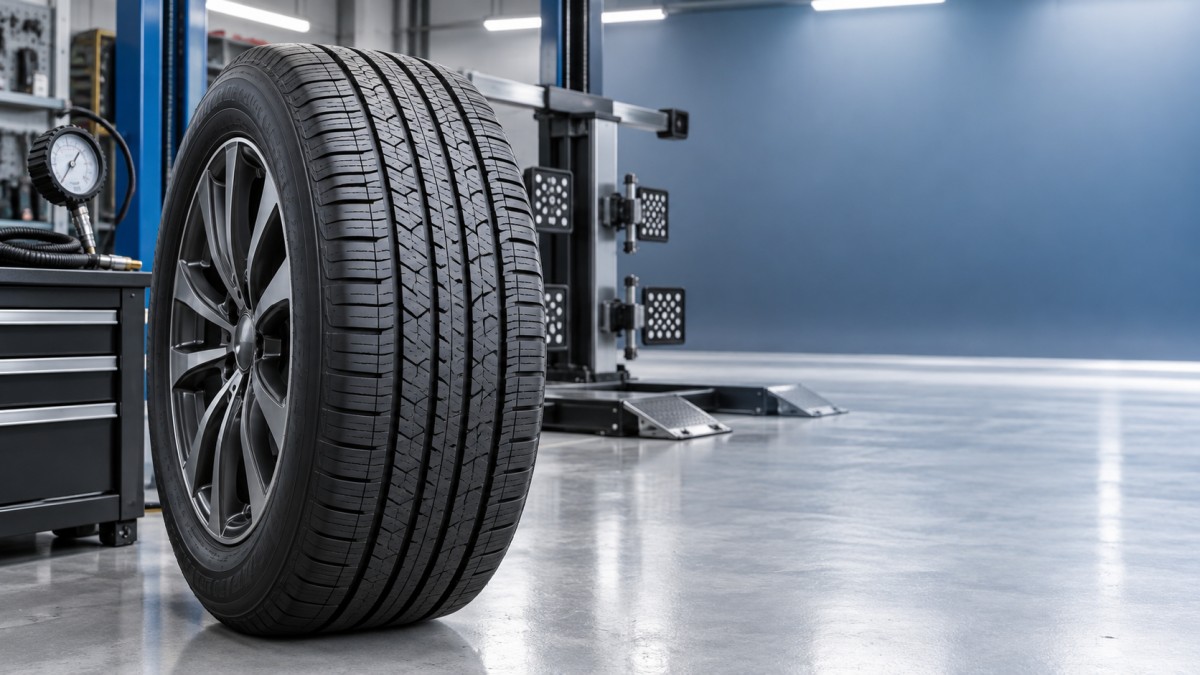
Pressure Control Is a Process, Not a Sticker Check
All Season Passenger Tires are designed to work within a defined inflation range, but the correct service pressure is determined by the vehicle manufacturer’s recommendation, not by the maximum pressure molded onto the sidewall. The sidewall value describes a tire limit under specified conditions; it is not a universal operating target.
Check pressure when tires are cold, preferably before the vehicle has been driven or after it has been parked long enough to stabilize. In real operations, this means building checks into dispatch, return-to-base, or scheduled maintenance—not asking drivers to remember only when a warning lamp appears. A calibrated gauge matters. A gauge that consistently reads incorrectly can create a false sense of control across an entire fleet.
Pressure records become more valuable when they are tied to vehicle position. If the same front-left tire repeatedly loses pressure, inspect the valve core, wheel condition, bead area, and tread for puncture damage rather than repeatedly topping it up. A slow leak can produce shoulder wear long before it triggers an obvious operational complaint.
Alignment Should Follow the Vehicle’s Real Working Condition
Many alignment checks are performed after visible tire damage has already developed. That is late. Alignment should also be checked after suspension repairs, steering-component replacement, significant curb or pothole impacts, and any driver report of pulling, off-center steering, or new vibration. A vehicle can drive “well enough” while still scrubbing away a tread shoulder.
Do not treat an alignment printout as the entire answer. Before adjustment, inspect ball joints, control-arm bushings, tie-rod ends, wheel bearings, springs, and shock absorbers. If a worn component allows geometry to move while braking or cornering, static alignment values may look acceptable in the workshop and still fail to protect the tire on the road.
For passenger fleets that regularly carry tools, samples, passengers, or other variable loads, maintenance teams should consider whether the vehicle is being inspected at a condition that reflects its normal use. Persistent rear-tire wear on loaded vehicles deserves a load and suspension review, not an automatic assumption that the tire compound is at fault.
Rotation Must Respect Tire Construction and Placement Rules
Rotation spreads wear across the set, but it should not be performed blindly. The correct pattern depends on whether tires are directional, asymmetric, staggered, or mounted on different wheel widths. Directional tires generally need to remain on the same side unless they are remounted; asymmetric tires must retain the correct “outside” and “inside” orientation. Rotating them incorrectly may sacrifice drainage performance and handling consistency.
Instead of relying on a universal mileage interval, define rotation by the vehicle maker’s recommendation and the fleet’s operating pattern. High-frequency urban vehicles can wear front tires very differently from highway vehicles because of steering inputs, braking, roundabouts, and repeated low-speed turning. Record tread depth at several points across each tire before rotation. If one tire is already significantly different, rotation may hide the symptom without correcting the cause.
Separate Passenger-Tire Failures From Off-Road Duty Problems
A common quality-control mistake is applying one inspection mindset to every tire in the yard. Passenger all-season tires typically face road-temperature cycles, stop-start braking, paved-surface abrasion, and alignment sensitivity. Off-road or utility equipment faces a different mix of impacts, loose surfaces, traction demands, and load behavior.
For example, an all-terrain product such as SL306 is intended for durable off-road use in specified sizes and load/pressure configurations. Its inspection priorities may include cuts, lug damage, bead condition, and suitability for the wheel and operating surface. Those checks are relevant to equipment use, but they should not be used to justify fitting an off-road tire where a passenger vehicle requires an approved road-oriented tire specification.
The wider lesson is simple: tire selection, rim compatibility, load capacity, and inflation guidance must match the actual vehicle and service environment. When those basics are mismatched, no rotation schedule will fully prevent irregular wear.
Build an Inspection Record That Helps Find Repeat Faults
The best fleet tire program is usually a modest one that technicians can follow consistently. At each planned inspection, record tire position, cold pressure, tread depth across the inner, center, and outer zones, visible damage, and any vibration or pulling complaint. Add a note when wheels are balanced, tires are rotated, or alignment work is completed. Photographs are useful when a pattern is unusual or developing rapidly.
Over several inspection cycles, this record separates isolated damage from recurring system faults. Repeated front-axle feathering points maintenance toward steering geometry. Recurrent center wear across several vehicles may indicate a pressure-control issue. A single damaged tire in a predictable route may lead to a review of road hazards, parking practices, or driver reporting procedures.
Tire manufacturers and suppliers also have a role in making these discussions practical. Jinan Xinkunyu International Trading Co., Ltd., founded in 2001 and formerly known as Jinan Kunyu, produces semi-steel radial, truck, and special tires through a large manufacturing operation supported by engineering personnel and established logistics routes across China and many European and Asian markets. For quality teams, the useful conversation with any supplier is not only about availability. It should cover application fitment, traceability, storage condition, tire age at receipt, and the inspection information needed if an abnormal wear claim must be evaluated.
When irregular wear is discovered, avoid waiting for the next service interval if cords are exposed, a bulge appears, tread is separating, or the vehicle becomes unstable under braking. Remove the tire from service, inspect the wheel and vehicle components, and document what was found. Early action costs less than treating a visible tread pattern as cosmetic wear.
Chat Online