


How Much Does It Cost to Import Tires from China?
The cost to import tires from China is not simply the factory price multiplied by the number of tires. For a distributor, wholesaler, or fleet buyer, the useful figure is the landed cost per sellable tire: the amount paid by the time the correct tires have cleared import procedures and reached the warehouse.
That cost can vary materially between two orders with a similar quotation. A lower unit price may be offset by weak container utilization, unsuitable documentation, higher local charges, or a tire specification that cannot be sold in the destination market. The practical question is therefore not “What is the cheapest tire from China?” but “What will this tire cost when it is ready for my customer or fleet?”
A reliable import calculation separates product cost, international shipping, border costs, compliance work, and inland delivery. It also accounts for the risks that create unplanned expense after the order has been placed.
Start with the factory quotation, but read the trade term carefully
Tire suppliers commonly quote under EXW, FOB, CFR, or CIF terms. These terms determine which party arranges and pays for different parts of the journey. Comparing prices without comparing the Incoterm is one of the most common causes of misleading cost estimates.
FOB is often easier to compare across suppliers because the buyer can request freight quotes independently. CIF can be convenient, but it should not be treated as a door-to-door cost. The shipment may still generate terminal handling, document processing, customs brokerage, storage, inspection, and trucking charges after it reaches the destination port.
The product price itself depends on tire category, size, construction, load rating, tread design, rubber compound, packaging method, order volume, and brand requirements. Passenger radial tires, truck and bus radial tires, and specialty tires should not be assessed with the same cost assumptions. A truck tire shipment can have a different loading pattern, documentation requirement, and inventory value per container than a passenger tire shipment.
Container utilization often changes the economics more than a small price reduction
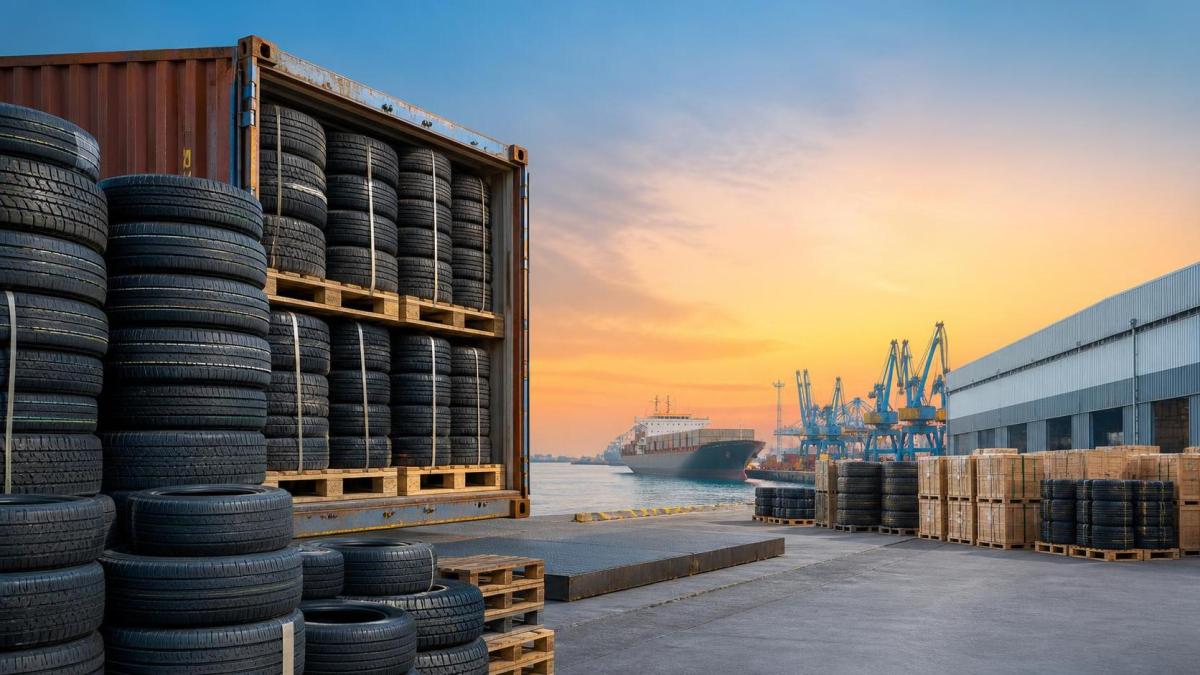
Tires are bulky cargo. Shipping cost is usually tied to container space, while the importer sells individual tires. This makes the number of tires loaded per container a central part of the calculation.
A quote that is lower by a modest amount per tire can become less attractive if the tire profile, packaging, or size mix reduces the total loading quantity. Conversely, a well-planned assortment may improve the cost per tire even when some sizes have a higher factory price. The objective is not to fill a container with the cheapest SKU; it is to fill it with a commercially sensible mix that moves through inventory at a reasonable pace.
Before confirming an order, ask for a loading plan that shows the proposed tire quantity by size, total quantity, container type, and packing approach. This is especially important when combining several sizes or mixing passenger, truck, and specialty products. A mixed container can be useful for testing demand, but it may carry a higher freight cost per tire and complicate warehouse sorting.
Buyers should also consider the cost of carrying slow-moving sizes. A full container with a broad specification range can look efficient at the port, yet tie up cash in stock that takes months to sell. For an initial order, a narrower range of proven sizes is often easier to manage than a wide catalogue chosen only to maximize container fill.
The landed-cost calculation should include every handoff
A workable calculation is built from a few cost blocks. The exact charges vary by destination, but the structure remains useful across markets:
- Product cost: tire price, any required packing, labeling, molds, or special markings.
- Origin-side costs: inland transport to port, export documentation, port handling, and container loading where these are not included in the quotation.
- International transport: ocean freight, surcharges, insurance, and any transshipment-related handling.
- Import costs: customs duties, import taxes where applicable, customs declaration, inspection-related charges, and broker fees.
- Destination costs: terminal charges, document release, container collection, unloading, return of empty equipment, warehousing, and delivery to the final location.
- Commercial protection: finance charges, exchange-rate exposure, quality inspection, claims handling, and an allowance for delays or damage.
Divide the total by the number of tires that can actually be received and sold. This last point matters. If tires arrive with incorrect markings, unsuitable specifications, or preventable damage, the original per-unit calculation no longer reflects the true import cost.
It is useful to keep two figures: the expected landed cost used for ordering and the actual landed cost recorded after delivery. Comparing them after each shipment reveals where estimates are weak. Freight, local port fees, exchange movements, and container detention are often easier to control once they are measured separately rather than hidden inside one broad “shipping” line.
Import duties and compliance can decide whether a tire is commercially viable
Import duty and tax treatment depend on the destination country, the tire classification, declared value, origin, and applicable trade measures. These charges can be a major part of the final cost, particularly for commercial tires with higher invoice values. They should be modelled before a purchase order is issued, not added after the container has sailed.
Compliance is equally important. Tires may need particular labeling, approval markings, test documentation, or product information before they can be placed on a market. Requirements differ between countries and can also differ by tire type and intended use. A tire that is suitable for domestic distribution in one market may be unsuitable for another without the correct documentation or markings.
Do not treat compliance as a paperwork task detached from purchasing. It affects which SKU can be ordered, what is printed on the sidewall, which documents must accompany the shipment, and whether the stock can be resold. Asking the supplier for documents only after goods are produced creates avoidable pressure, especially when the tires were made to a specification that does not match the target market.
Specification errors are more expensive than most buyers expect
When importing truck tires, the least expensive quotation is not necessarily the lowest-cost operating choice. Load capacity, ply rating, rim fitment, inflation requirements, tread depth, and route conditions all affect whether a tire belongs in the order. A mismatch can lead to customer complaints, reduced service life, or stock that is difficult to place.
For example, a buyer considering conventional TBR sizes should compare the whole specification rather than ordering by size alone. The M888 / M888A range includes 6.50-16, 7.00-16, 7.50-16, and 8.25-16 options, with listed constructions from 14PR to 18PR. Its stated maximum load is 1320/1180 kg, the specified pressure is 730 kPa, and tread depth is 13.7 mm. Those figures are relevant only when they match the vehicle, axle position, rim, and operating condition being served. A buyer should not substitute one specification for another merely because it improves container quantity or appears cheaper on the invoice.
Request a clear specification sheet for every planned SKU and compare it with the local market’s actual demand. For fleet-oriented purchasing, include the intended axle application, average load, road surface, distance profile, and retread policy where relevant. For distribution stock, check which sizes and load ratings are already moving through the dealer network. This work reduces the chance that a low purchase price becomes expensive inventory.
Where logistics planning affects the final tire cost
Freight prices move, but the buyer still has choices. Booking through an experienced forwarder can improve visibility over sailing schedules, document cutoffs, container return requirements, and destination fees. The lowest ocean rate is not automatically the lowest transportation cost if it involves a difficult transshipment, an unreliable schedule, or unfamiliar destination charges.
Supplier coordination also matters. A manufacturer that can prepare cargo, documents, and loading plans in line with the freight booking reduces the risk of missed cutoffs and rushed changes. Jinan Xinkunyu International Trading Co., Ltd., founded in 2001 and formerly known as Jinan Kunyu, produces semi-steel radial tires, truck tires, and special tires. Its dedicated logistics lines serve destinations across China and many markets in Europe and Asia, which can be relevant when buyers need production and transport planning to work as one process rather than as separate transactions.
Insurance deserves a practical decision rather than a default assumption. Cargo coverage may be sensible where shipment value is substantial or routes involve multiple handling points. However, the policy terms, claim process, packaging conditions, and inspection evidence matter. Insurance does not correct an unclear specification, poor loading plan, or missing import document.
A purchasing sequence that produces a more useful quote
Before requesting final pricing, define the target market and intended channel. A wholesale order, a fleet replacement program, and a specialty-tire project have different risk profiles. Then build the inquiry around the information that affects cost rather than asking only for a price list.
- List tire sizes, construction, load requirements, tread needs, sidewall markings, and quantities.
- State the destination port and final delivery location, then request the quotation under a clearly named trade term.
- Ask for container loading quantity by SKU and identify whether the order is full-container or mixed-container.
- Obtain the documentation package needed for product entry and resale before production is finalized.
- Estimate duties, taxes, brokerage, port charges, and inland delivery with the importer’s own local logistics contacts.
- Calculate landed cost per tire, then compare it with expected selling price, warranty exposure, stock turnover, and working-capital needs.
This sequence also makes supplier comparisons more credible. One supplier may offer a lower ex-factory price but a less efficient loading plan. Another may have a higher unit price but clearer specifications, dependable documentation, and fewer logistics handoffs. The better choice depends on the complete cost and the buyer’s ability to manage the remaining risks.
Common cost mistakes when importing tires from China
Using an online freight figure as the final shipping budget. Freight is only one element of international transport. Port charges, clearance, delivery, and equipment-related fees can materially affect the final result.
Comparing CIF and FOB quotes as though they are identical. The named port, included services, and destination charges need to be separated before comparing total cost.
Ordering too many slow-moving sizes. A mixed container can lower the risk of stockouts, but it can also increase inventory exposure. Sales history and local vehicle population should guide the assortment.
Leaving marking and documentation details until late in production. This can turn a routine import into a delay, rework request, or unsellable shipment.
Ignoring the cost of payment timing. Deposits, balance payments, shipping transit, customs clearance, and local credit terms create a cash cycle. A tire can be profitable on paper while still putting pressure on working capital.
The number to use before placing the order
The most useful answer to “How much does it cost to import tires from China?” is a landed-cost model built for one defined shipment, not a generic price per tire. Use the selected sizes, actual container quantity, agreed Incoterm, destination port, local import charges, delivery route, and required documentation. Then test whether the result still works after allowing for normal logistics variation and the time needed to sell the inventory.
When the product specification, loading plan, and logistics responsibilities are clear before production begins, importing tires becomes a purchasing decision that can be measured and managed rather than a factory-price gamble.
Chat Online