


How casing quality affects the TBR tire price over a tire's life
For quality-control and safety teams, the purchase invoice is only the first part of TBR tire cost. The casing determines how the tire carries load, manages heat, resists impact damage, and whether it remains a viable retreading candidate after the original tread is worn. A lower-priced tire with an unstable casing can become the more expensive option when it requires early removal, cannot be retreaded, or creates recurring inspection and replacement work.
The practical question is not whether every tire needs the highest-cost casing construction. It is whether the casing is matched to the fleet's loading pattern, route severity, maintenance discipline, and retread policy. Where trucks operate heavily loaded, travel long distances, encounter rough yards, or depend on multiple tire lives, casing quality has a direct influence on cost per kilometer and safety exposure.
Why the casing changes the economics of a TBR tire
The tread is the visible wear component, but the casing is the structural asset. Its body plies, belts, bead area, inner liner, and rubber compounds must work together through repeated flexing, heat cycles, road shocks, and inflation-pressure variation. When that structure stays sound, the tire can usually deliver its planned first-life mileage and may retain enough integrity for retreading. When it does not, tread depth alone becomes irrelevant.
Three cost effects follow from casing quality:
- First-life reliability: A stable casing is less likely to be removed early because of separations, exposed cords, bead damage, or structural deformation. This improves the chance that the tread is used to its intended removal point.
- Retread eligibility: Retreading depends on an inspectable, repairable casing. A tire that reaches end of tread with excessive heat damage, corrosion, impact breaks, or hidden internal separation may have no residual value.
- Operational disruption: Premature removals create more than a replacement-tire cost. They can trigger roadside service, vehicle downtime, inventory pressure, wheel-position mismatch, and extra inspection work.
For fleets that do not retread, casing quality still matters. It affects how consistently tires remain in service under load and how predictable replacement intervals are. For fleets that do retread, the casing is often the central economic variable because it supports more than one tread life.
A low invoice price can conceal a higher lifecycle price
Comparing TBR Tire Price only by size, pattern, and unit cost can produce misleading results. Two tires may have similar tread depth and stated load capability, yet behave differently once they are exposed to heat, sustained high load, irregular inflation, or repeated curb and stone impacts.
A less expensive tire is not automatically a poor purchase. It may be appropriate for lower annual mileage, controlled local distribution, light duty cycles, or operations where retreading is not economically practical. The problem begins when a buyer applies that same tire to long-haul, regional freight, mixed-road service, or overloaded operation without allowing for its structural margin.
Quality teams should therefore separate the purchase decision into two questions: what does the tire cost to install, and what usable life can its casing reasonably preserve under the intended duty cycle? The second question should carry more weight when the operation relies on casing recovery.
What to inspect before treating a tire as a retread asset
Casing condition cannot be judged from tread wear alone. A tire may look evenly worn on the outside while heat, moisture, or impact damage has reduced its suitability for another service cycle. Inspection at removal should be part of the buying decision, because it reveals whether a selected tire is preserving casing value in the actual fleet environment.
Useful inspection points include:
- Bead condition: Check for chafing, distortion, mounting damage, and signs of operation at low pressure. Bead-area damage can remove a casing from service even when the crown area appears acceptable.
- Inner-liner condition: Look for cracking, blistering, loose material, and signs of moisture ingress. A compromised liner can allow internal corrosion and make later retreading unsafe.
- Shoulder and crown integrity: Inspect for heat-related separation, bulges, penetrations, and irregular wear patterns that may indicate alignment, suspension, inflation, or loading problems.
- Repair history: Repairs must be evaluated by location, size, and quality. A casing with repeated or poorly located damage should not be treated as equivalent to an undamaged one.
- Removal reason: Record why each tire left service. If removals are driven by road hazards or maintenance failures rather than normal tread wear, changing tire specifications alone may not improve lifecycle cost.
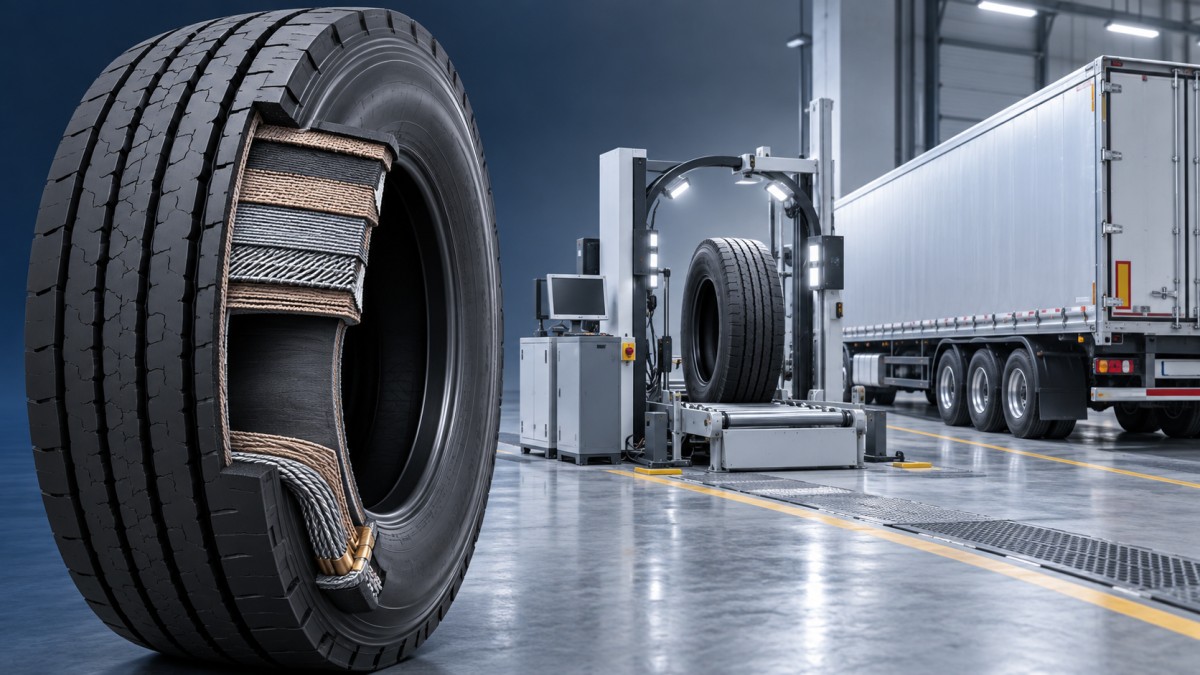
Inspection findings should feed back into purchasing. If a fleet repeatedly loses casings through shoulder separations, for example, the review should include load distribution, inflation control, wheel alignment, route conditions, and tire construction. Reordering a lower-priced tire without understanding the removal pattern only repeats the uncertainty.
Match casing strength to the operating environment
Casing requirements rise when duty conditions create higher internal heat or more frequent structural shocks. Sustained highway speeds under heavy load, stop-start regional work, abrasive yards, construction access roads, and poorly maintained wheel ends do not stress a tire in the same way. A specification suitable for one position or route can be a poor fit for another.
Load and inflation deserve particular attention. Underinflation increases sidewall flexing and heat buildup; overload increases structural stress; overinflation can reduce the tire's ability to absorb impact. A premium casing cannot compensate indefinitely for poor operating discipline. Conversely, a sound inflation-management program can help preserve casing value and make a stronger tire construction economically justifiable.
Pattern features also matter when they protect the casing indirectly. In mixed-road or stone-prone work, tread designs that reduce stone retention can lower the risk of penetrations reaching the belt package. For example, HD167 uses a wide, deep-groove tread with transverse shoulder features and stone-ejector elements at the groove base. Those details should be assessed as protection against service damage, alongside the required size, load index, ply rating, and wheel position, rather than treated as a substitute for casing evaluation.
Use a lifecycle comparison that procurement and safety can both defend
A practical evaluation does not require a complicated model, but it does require consistent records. Compare candidate tires by installed cost, removal mileage, removal reason, casing acceptance rate for retread, retread mileage where applicable, and service events associated with tire failure. These measures reveal whether the initial price difference survives contact with the fleet's actual conditions.
For safety managers, this approach also avoids a common mistake: treating the casing as a procurement detail rather than a control point. A tire may meet the required size and load rating on paper, yet still be the wrong lifecycle choice if its casing acceptance rate is poor under the fleet's real operating conditions.
The most defensible TBR tire decision is therefore based on the cost of usable service, not the cost of initial installation. Where routes are demanding and retreading is part of the operating model, casing quality should be specified, inspected, and measured with the same discipline applied to tread wear and inflation pressure.
Chat Online