


Can Summer Passenger Tires increase hydroplaning risk in deep water?
Yes. Summer Passenger Tires can increase hydroplaning risk in deep standing water when their tread cannot evacuate water quickly enough for the vehicle’s speed, load, and road conditions. This does not mean that summer tires are inherently unsafe in rain. A well-designed, properly inflated summer tire with sufficient tread can perform very well on wet pavement. The concern begins when deep water exceeds the tire’s drainage capacity, especially with worn grooves, high speed, or poor road drainage.
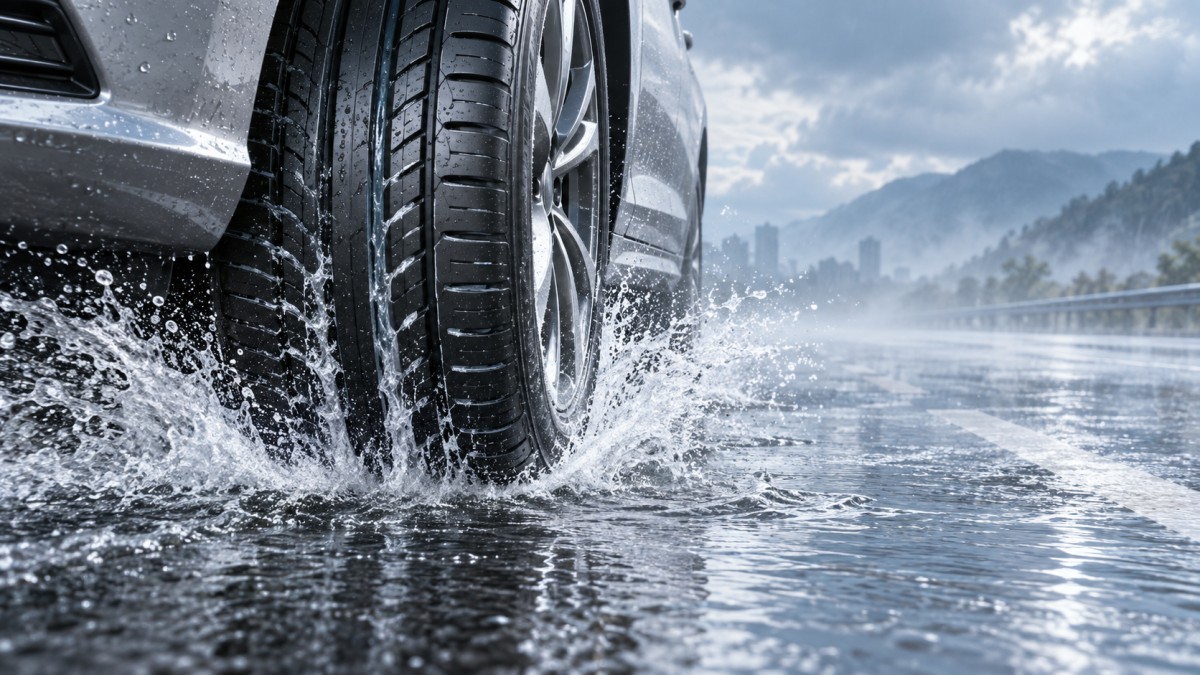
Hydroplaning occurs when a layer of water builds between the tire and the road surface. Instead of the tread maintaining contact with the pavement, the vehicle begins to ride on the water. Steering response becomes weak, braking effectiveness drops, and the driver may lose directional control with little warning. In fleet safety work, this risk should be treated as a combined tire, vehicle, driver, and route-management issue rather than a tire-category issue alone.
Why deep water changes the performance of summer tires
Summer tires are generally designed for warm conditions and responsive road handling. Their rubber compounds and tread layouts are often optimized for dry grip, wet-road braking, cornering stability, and heat management at normal road speeds. However, deep water creates a different challenge: the tire must move a large volume of water away from the contact patch in a very short time.
The main grooves, lateral channels, shoulder openings, and smaller sipes all influence how effectively a tire clears water. When the road is only wet, the tread may still maintain adequate contact. When water forms a deeper layer, especially in wheel tracks, drainage channels can become overwhelmed. At that point, even a tire with acceptable wet-road behavior may begin to hydroplane.
The risk rises rapidly with vehicle speed. A driver may feel stable on a wet surface at one speed and lose traction after a relatively small increase in speed when entering pooled water. This is why a wet-weather speed policy should not rely only on the legal road limit. It should account for drainage quality, rainfall intensity, lane condition, tire wear, and the likelihood of standing water on the route.
Tread depth is the first inspection priority
A tire can look serviceable at a glance while having much less wet-water capacity than when new. As tread wears, the groove volume becomes smaller. Less open space means less water can be moved away from the road contact area. The tire may still provide acceptable dry handling, but its margin in deep water is reduced.
For that reason, a fleet inspection program should not treat the legal wear limit as the only replacement trigger. A tire nearing that threshold may still be permitted for use in some conditions, yet it is not the same as a tire suitable for frequent heavy rain, urban flooding, poorly maintained roads, or high-speed routes. Vehicles regularly operating in those conditions need a more conservative wet-service tread-depth standard.
Inspection should also look beyond the center of the tread. Uneven wear can leave one shoulder with reduced groove depth, while cupping, heel-and-toe wear, or irregular wear across the tread can disrupt water flow. These patterns may indicate alignment, suspension, balancing, inflation, or rotation issues. Replacing the tire without correcting the cause can allow the same wet-weather weakness to return quickly.
Inflation pressure affects hydroplaning resistance
Underinflation is a common and preventable contributor to wet-road risk. A tire running below its required pressure can deform more than intended, changing the shape of the contact patch and reducing the tread’s ability to channel water efficiently. It also generates more heat and can accelerate shoulder wear, further reducing drainage performance over time.
Overinflation is not a solution. Excessive pressure may reduce the effective tread contact area, contribute to center wear, and make the vehicle less forgiving on uneven wet pavement. The correct approach is to maintain the pressure specified for the vehicle, tire size, and actual load condition, with checks performed when tires are cold. A pressure reading should be evaluated together with visible wear and operating load, not as an isolated pass-or-fail number.
Do not judge a summer tire by tread depth alone
Two tires with similar remaining tread depth can behave differently in standing water. The tread pattern matters because it determines where water can travel. A pattern with continuous circumferential grooves and effective lateral evacuation paths is generally better positioned to move water than one with limited open channels. Shoulder design also matters because water often needs an exit route away from the center of the contact patch.
For replacement selection, the useful question is not simply, “Does this tire have enough tread?” It is, “Does this tire’s pattern retain useful drainage channels throughout the planned service interval?” A tire intended mainly for dry, warm urban roads may be a reasonable choice for one fleet but a poor match for another fleet that frequently crosses exposed highways, low-lying roads, construction access routes, or areas with recurring ponding.
Rubber compound also has a role, although it should not be used as a shortcut for assessing deep-water safety. Compound characteristics influence grip on wet road texture, while grooves manage the bulk movement of water. In substantial standing water, no passenger tire can compensate for excessive speed or a road surface that is deeply flooded.
Operational controls reduce the risk more than tire changes alone
A tire specification is only one part of the control plan. Wet-weather incidents often occur when drivers enter pooled water at a speed suitable for a merely wet road, not for a water-covered lane. Sudden braking, abrupt steering, and cruise control use can make a loss of grip more difficult to manage once hydroplaning begins.
A practical wet-weather procedure should direct drivers to reduce speed before entering visible standing water, hold a steady steering input, avoid hard braking while crossing the puddle, and increase following distance. If the vehicle begins to hydroplane, the driver should ease off the accelerator gradually and avoid sudden steering corrections until the tires regain contact.
Route controls matter as well. Repeated reports of water accumulation at the same access road, loading area, highway section, or parking exit should lead to a route note, speed restriction, or alternative plan during heavy rain. Road drainage defects can create a recurring hazard even when the fleet’s tires are correctly maintained.
A useful decision sequence for tire and safety reviews
- Classify the exposure: Identify whether vehicles encounter light rain, frequent pooling, deep standing water, or flooded road sections.
- Inspect actual tread condition: Measure groove depth across the tire and record uneven wear, cuts, embedded stones, and damaged groove bases.
- Confirm cold inflation practice: Check that pressure targets match the approved vehicle and load application, and investigate repeated pressure loss.
- Review the pattern, not only the brand or price: Compare drainage channels, shoulder openness, and intended operating conditions.
- Align driver controls with route conditions: Set practical wet-weather speed expectations and flag known standing-water locations.
One common mistake is replacing a worn tire with the same size and assuming the hydroplaning problem has been solved. If the route exposes vehicles to deep water, the replacement decision should also consider pattern design, vehicle loading, maintenance discipline, and whether the driver guidance reflects real road conditions.
Where product selection needs to stay application-specific
Tread design principles apply across vehicle classes, but tire selection must remain specific to the vehicle and duty cycle. A truck-oriented pattern should not be presented as a substitute for a passenger-car summer tire simply because both need traction and water evacuation. For commercial applications using applicable truck sizes, products such as HDD728 can be reviewed on their own stated pattern, tread-depth, heat-dispersion, and durability characteristics. Those specifications should be matched to the approved wheel position, load, and operating environment.
Jinan Xinkunyu International Trading Co., Ltd. produces semi-steel radial tires, truck tires, and special tires. When sourcing across different fleet categories, separating passenger-vehicle wet-weather requirements from truck-duty requirements helps prevent an apparently similar tire feature from being applied to the wrong service condition.
When replacement should be accelerated
Replacement deserves earlier consideration when a vehicle regularly operates in heavy rain and shows shallow grooves, uneven shoulder wear, recurring underinflation, damaged channels, or a history of wet-road stability complaints. It should also be prioritized when a route includes high-speed travel through areas where water commonly collects.
Summer Passenger Tires do not automatically create hydroplaning. Deep water exposes the limits of every tire-road system. The most reliable prevention approach is to preserve tread drainage capacity, maintain correct inflation, control wet-weather speed, and avoid treating standing water as ordinary wet pavement.
Chat Online