


Are All Season Passenger Tires suitable for mild winter routes?
All-season passenger tires can be suitable for mild winter routes, provided that winter conditions are occasional, temperatures do not remain deeply below freezing, and the route is maintained rather than routinely covered with compacted snow or ice. For a technical evaluator, the decision should be based on the route's worst credible operating condition, not its average weather description.
They are a reasonable year-round choice for passenger vehicles operating through cool rain, light slush, brief snowfall, and mostly cleared urban or highway surfaces. They should not be approved as a substitute for winter tires where drivers regularly encounter persistent snowpack, untreated secondary roads, steep grades, or repeated overnight freeze-thaw cycles.
Define “mild winter” by road condition, not by calendar
A mild winter route is often described too broadly. A location may have only limited snowfall while still creating difficult tire conditions: shaded roads can retain ice, bridges freeze earlier than surrounding pavement, and wet roads can become slick when temperatures drop around the freezing point.
For tire selection, route exposure is more useful than seasonal labels. Review the following operating factors before specifying All Season Passenger Tires:
- Lowest expected temperatures during normal operating hours, including early morning and overnight use.
- Whether roads are promptly plowed, salted, or otherwise maintained after snow events.
- Frequency of wet-to-freezing transitions, which can create thin ice with little visual warning.
- Route grade, curve density, bridge sections, and access roads to facilities or residential areas.
- Vehicle loading, passenger duty, braking demands, and the consequences of a missed stop or loss of directional control.
A commuter route on treated roads may remain appropriate for all-season fitment even with occasional snowfall. A similar vehicle assigned to hilly access roads, airport perimeters, rural service calls, or early-shift travel may face a materially different risk profile.
Why tread design and compound behavior matter
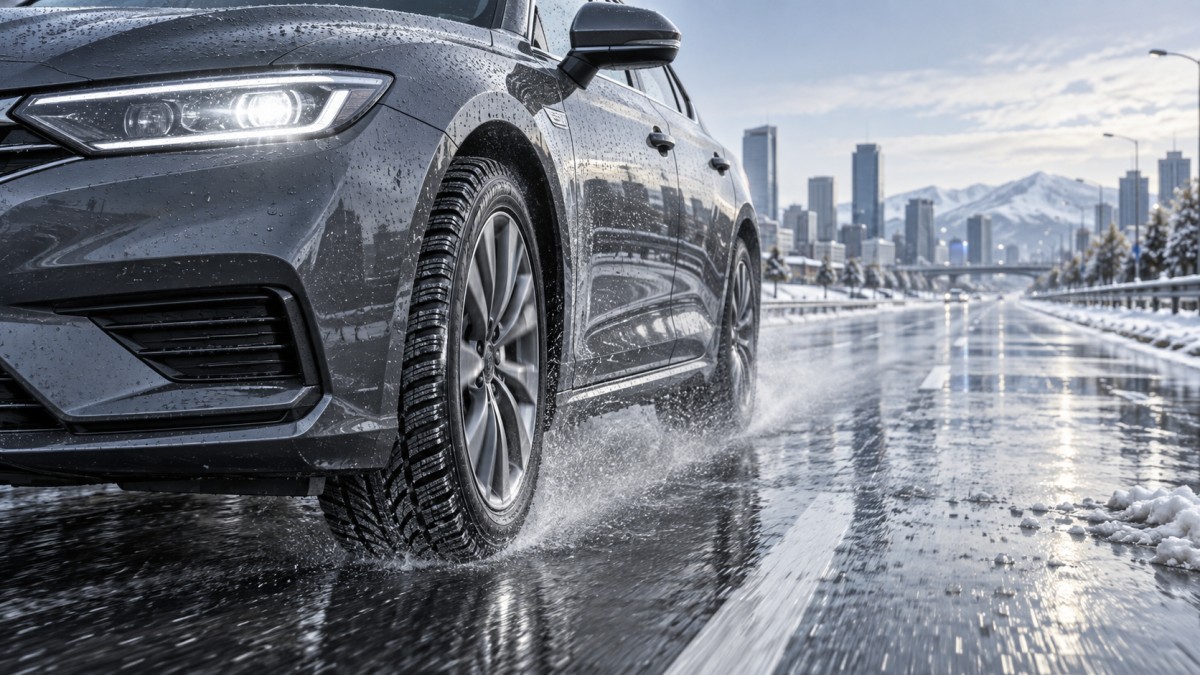
All-season tires are designed to balance warm-weather handling, wet traction, tread life, ride comfort, and limited cold-weather capability. Their tread compound generally needs enough flexibility in cool conditions to maintain contact with the road, while their groove network must remove water and slush from the contact patch.
That balance works well within its intended range, but it comes with a ceiling. As temperatures fall and surfaces become packed with snow or glazed with ice, the tire needs more than drainage. It needs numerous biting edges and a compound optimized to remain compliant in sustained cold. Dedicated winter tires are built around that requirement. An all-season pattern may still move a vehicle through light snow, yet braking and cornering reserves can narrow quickly as conditions worsen.
Technical reviewers should therefore avoid approving a tire solely because it has wide circumferential grooves or an aggressive visual pattern. Grooves help manage water and slush, but winter performance also depends on sipes, block stiffness, compound formulation, tread depth, and the tire's ability to maintain traction after wear.
Wet braking can be the more frequent winter issue
For many mild-winter fleets, rain on cold pavement occurs more often than deep snow. This shifts the evaluation toward wet braking and hydroplaning resistance. A tire that drains standing water effectively and remains stable under braking may provide more day-to-day value than one selected primarily for occasional snow appearance.
Inspect the tread layout for continuous water evacuation paths and enough void space to clear slush without making the tread excessively unstable. Directional or V-shaped groove features can support water movement and steering response, but the evaluator should still consider the complete tire construction and the intended vehicle category.
The distinction between passenger and commercial applications also matters. Passenger tire decisions should be evaluated against passenger-vehicle dimensions, load ratings, and operating speeds. A truck-bus radial design such as HDS228, which uses four main grooves, auxiliary fine grooves, and V-type pattern blocks to support drainage and steering performance, illustrates the role of groove architecture in wet-road control. Its listed sizes and load indices, however, place it in a TBR application context rather than making it a passenger-tire recommendation.
Set approval limits before the tire enters service
The most reliable decision is often conditional approval rather than a broad statement that all-season tires are “winter capable.” Define the operating envelope in advance. This gives dispatchers, fleet managers, and drivers a clear response when a route falls outside the tire's intended conditions.
Tread wear needs to be part of that approval. A tire that is acceptable when new may lose wet and slush performance as the grooves become shallower. For fleet-controlled vehicles, use inspection thresholds that reflect the winter route exposure rather than waiting only for the legal minimum tread depth. Inflation pressure, alignment condition, and uneven wear should be reviewed at the same time; a well-designed all-season tread cannot compensate for a compromised contact patch.
Do not let the tire choice replace operational controls
Even on mild winter routes, tire selection is only one control. Seasonal pressure checks, driver guidance for longer following distances, and a route escalation process for snow or ice events can have more effect than marginal differences between similar all-season products. Vehicles that must run regardless of conditions should be assessed to the more demanding route, not to the route used most often.
The practical conclusion is narrow but useful: All Season Passenger Tires are appropriate where winter is mainly cold, wet, and occasionally slushy, and where roads are kept clear. Once the operating duty includes regular ice, snow-covered surfaces, or low-temperature exposure that persists for days, dedicated winter capability becomes a safety and performance requirement rather than an optional upgrade.
Chat Online